Why This Debate Matters
Walk into almost any church in America and you will find an unspoken assumption about the Holy Spirit. In some churches, the assumption is that the Spirit works today exactly as He did in the book of Acts — healings, prophecies, tongues, and miraculous signs are expected, prayed for, and sometimes claimed. In other churches, the assumption is equally firm but runs in the opposite direction: those gifts served their purpose in the apostolic era and have ceased. The Spirit still works, but He works through Scripture, through preaching, and through the ordinary means of grace. Not through miracles.
This is the cessationism vs. continuationism debate, and it is not academic. It shapes how churches worship, how pastors counsel, how missionaries operate, and how individual believers pray when the diagnosis comes back bad. If tongues and prophecy continue today, then the church that ignores them is quenching the Spirit. If those gifts have ceased, then the church that practices them is building on a dangerous foundation of subjectivism and potential deception.
The stakes are high in both directions.
The Scroll has assembled eight books from the strongest voices on every side of this question. What follows is not a verdict. It is a map of the terrain — so that wherever you land, you land with your eyes open.
The Cessationist Position
Cessationism teaches that the miraculous and revelatory gifts of the Holy Spirit — tongues, prophecy, healing, and miracles — ceased with the death of the apostles or shortly after the close of the New Testament canon. These gifts served a specific, unrepeatable purpose: to authenticate the apostles as God's messengers and to lay the foundation of the church. Once the foundation was laid and the canon of Scripture was complete, the scaffolding came down.
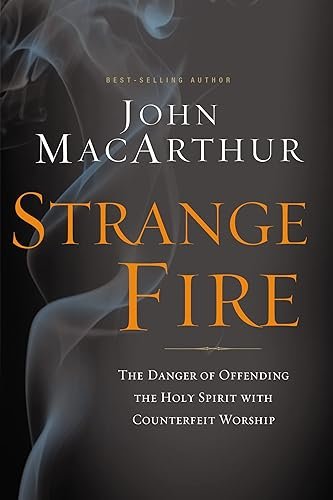
The most forceful modern defender of this position is John MacArthur. In [Strange Fire](/library/strange-fire), MacArthur makes a sweeping indictment of the modern charismatic movement. His central argument is that much of what passes for the work of the Holy Spirit in charismatic churches is not merely mistaken but dangerous — a distortion of biblical pneumatology that dishonors the very Spirit it claims to honor. MacArthur contends that the gift of tongues in Acts was known human languages, not ecstatic utterance; that New Testament prophecy carried absolute divine authority and cannot be reduced to fallible impressions; and that the modern healing movement produces more false hope than genuine miracles.
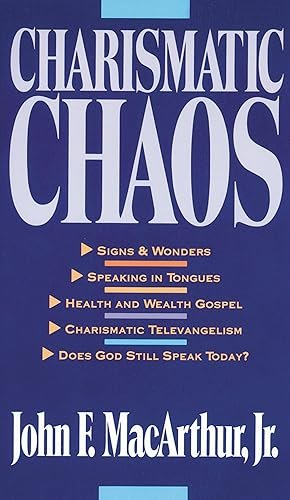
MacArthur's earlier work [Charismatic Chaos](/library/charismatic-chaos) covers much of the same ground with particular attention to the prosperity gospel and the excesses of televangelism. Where Strange Fire is a theological broadside, Charismatic Chaos is a more detailed examination of specific charismatic practices and their departure from biblical norms.
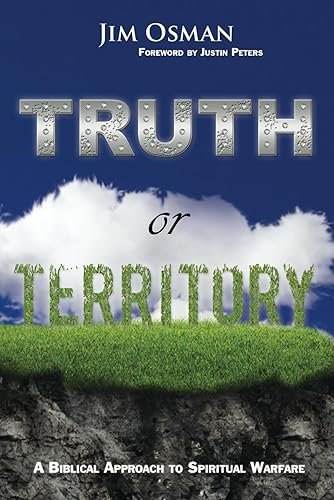
Jim Osman's [Truth or Territory](/library/truth-or-territory) approaches the question from the angle of spiritual warfare. Osman argues that much of the contemporary spiritual warfare movement — binding demons, claiming territories, rebuking principalities — has no basis in the New Testament and is built on a misreading of passages like Ephesians 6 and Daniel 10. For Osman, the cessationist position is not just a doctrine about gifts. It is a doctrine about sufficiency. The Bible is enough. Prayer is enough. The ordinary means of grace are enough. You do not need apostolic sign gifts to fight the enemy. You need the armor of God and the Word of truth.
The cessationist case rests on several pillars: the foundational nature of the apostolic office (Ephesians 2:20), the sufficiency of Scripture (2 Timothy 3:16-17), the transitional nature of the book of Acts, and the historical observation that miraculous gifts appear to have faded from the mainstream church after the first few centuries.
The Continuationist Position
Continuationism teaches that all the gifts of the Holy Spirit described in the New Testament remain available to the church today. The Spirit has not withdrawn any of His gifts. What the early church experienced, the modern church can and should experience — not because it is a golden age to be copied, but because the same Spirit who empowered the apostles indwells every believer.
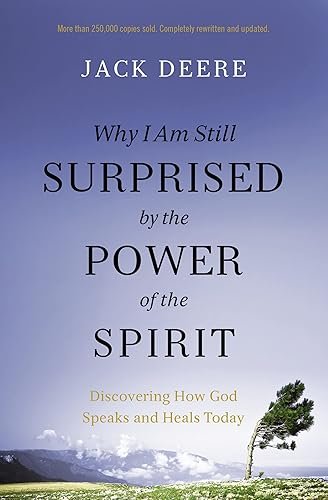
The modern continuationist case was given its most personal and compelling articulation by Jack Deere. In [Surprised by the Power of the Spirit](/library/surprised-by-the-power-of-the-spirit), Deere describes his own journey from committed cessationism to continuationism. As a professor at Dallas Theological Seminary — one of the flagship institutions of dispensational cessationism — Deere taught that the miraculous gifts had ceased. Then he encountered experiences he could not explain away. The book is part testimony, part theological argument, and part challenge to cessationists to reexamine their assumptions.
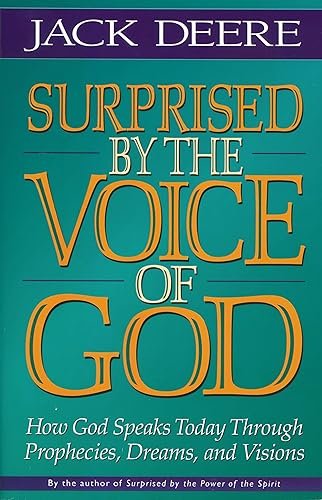
Deere's companion volume, [Surprised by the Voice of God](/library/surprised-by-the-voice-of-god), takes up the specific question of whether God still speaks outside of Scripture. Deere argues that God continues to communicate through impressions, dreams, prophetic words, and the inward witness of the Spirit. He is careful to affirm the supreme authority of Scripture — no prophetic word can override or add to the Bible — but he insists that the living God has not gone silent.
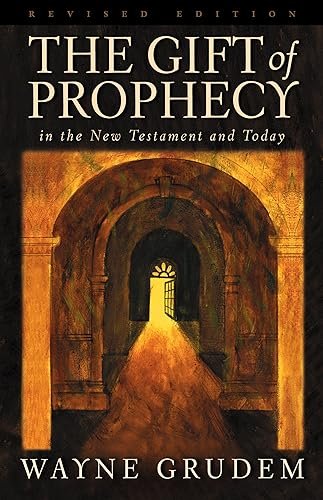
Wayne Grudem's [The Gift of Prophecy](/library/the-gift-of-prophecy) is the most rigorously academic treatment of continuationism on this list. Grudem makes a critical distinction that has shaped the entire debate: he argues that New Testament prophecy is fundamentally different from Old Testament prophecy. In the Old Testament, a prophet spoke with absolute divine authority — "Thus says the Lord" — and a single error meant death. In the New Testament, Grudem contends, ordinary congregational prophecy is a Spirit-prompted impression that must be tested and weighed by the community. It carries real spiritual value but not the authority of Scripture. This distinction allows Grudem to affirm ongoing prophecy without undermining the sufficiency or finality of the biblical canon.
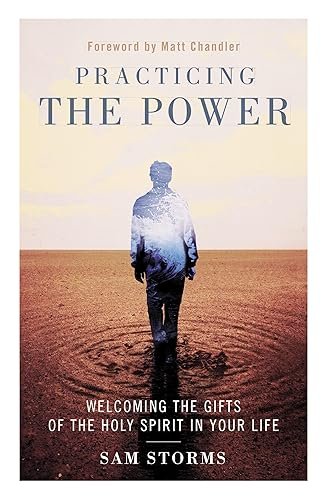
Sam Storms's [Practicing the Power](/library/practicing-the-power) is the most practical book in the continuationist collection. Where Deere tells his story and Grudem builds the theological framework, Storms addresses the question every pastor and church leader asks: if the gifts continue, how do we actually practice them in a responsible, orderly, biblically faithful way? Storms offers guidelines for prophecy in corporate worship, for discerning genuine gifts from counterfeits, for praying for healing without manipulating the vulnerable, and for building a church culture where the Spirit is welcome but Scripture remains the final authority.
The continuationist case rests on its own pillars: the absence of any clear biblical statement that the gifts would cease, the continuation of the same Spirit in the same church, the global testimony of the church (especially in the Global South, where charismatic Christianity is the fastest-growing expression of the faith), and passages like 1 Corinthians 13:8-12, which continuationists argue points to the cessation of gifts at Christ's return, not at the close of the canon.
Key Scripture Passages Both Sides Use
Several biblical texts sit at the center of this debate, and both sides claim them.
1 Corinthians 13:8-10 — "As for prophecies, they will pass away; as for tongues, they will cease; as for knowledge, it will pass away. For we know in part and we prophesy in part, but when the perfect comes, the partial will pass away." Cessationists have historically argued that "the perfect" is the completed canon of Scripture. When the Bible was finished, the partial gifts were no longer needed. Continuationists counter that "the perfect" refers to the return of Christ or the eternal state — verse 12 says "then I shall know fully, even as I have been fully known," which sounds like glorification, not the closing of the canon.
Ephesians 2:20 — The church is "built on the foundation of the apostles and prophets, Christ Jesus himself being the cornerstone." Cessationists argue that foundations are laid once; you do not keep laying them. The apostles and prophets did their foundational work, and the revelatory gifts that attended that work are no longer operative. Continuationists respond that Paul is referring to a specific group of foundational apostles and prophets, not to the gift of prophecy in general, which Paul elsewhere encourages all believers to pursue (1 Corinthians 14:1).
1 Corinthians 14:1 — "Pursue love, and earnestly desire the spiritual gifts, especially that you may prophesy." Continuationists take this as a standing command to the church of every era. You cannot earnestly desire something God has withdrawn. Cessationists respond that this instruction was given to a church in the apostolic age, when the gifts were still operative, and that we cannot universalize every situational command in the epistles.
Hebrews 2:3-4 — Salvation "was declared at first by the Lord, and it was attested to us by those who heard, while God also bore witness by signs and wonders and various miracles and by gifts of the Holy Spirit distributed according to his will." Cessationists emphasize the past tense: God "bore witness." The signs authenticated the original proclamation. Continuationists note that the passage does not say the signs stopped — it simply describes their historical function.
Mark 16:17-18 — "And these signs will accompany those who believe: in my name they will cast out demons; they will speak in new tongues..." This passage appears in the longer ending of Mark, which many scholars consider a later addition. Cessationists often set it aside on textual grounds. Continuationists who accept the passage read it as a promise to the church in all ages.
No single proof text settles the debate. Both sides are reading real Scripture and drawing real inferences. The question is which set of inferences builds the most coherent picture of what the Spirit is doing today.
The Open But Cautious Middle Ground
Not everyone fits neatly into one camp. A significant number of evangelical scholars and pastors occupy what might be called an "open but cautious" position. They are not convinced that the Bible teaches the cessation of the gifts. But they are also deeply wary of the excesses, manipulations, and theological errors they observe in parts of the charismatic movement.
The best single resource for understanding this middle ground is [Are Miraculous Gifts for Today?](/library/are-miraculous-gifts-for-today), a Zondervan Counterpoints volume that brings together four scholars representing four distinct positions: cessationist, open but cautious, third wave, and Pentecostal/charismatic. Each contributor makes a case, and the others respond. It is a model of serious theological dialogue — the kind of conversation the church needs far more of.
The open-but-cautious position typically holds that God can do anything He wants, including granting miraculous gifts today. But it insists on several guardrails: every claim must be tested by Scripture, prophecy must never be elevated to the level of biblical authority, emotional manipulation must be rejected, and the pursuit of spectacular gifts must never overshadow the pursuit of Christlike character. The fruit of the Spirit — love, joy, peace, patience, kindness, goodness, faithfulness, gentleness, self-control — always outranks the gifts of the Spirit in importance.
Many pastors who would never call themselves charismatic have quietly moved into this space. They pray for healing. They believe God speaks through impressions. They have seen things they cannot explain by natural means. But they refuse to build a theology on experience, and they will not sacrifice doctrinal precision for spiritual fireworks.
What This Means for Your Church
If you are a pastor or church leader, this debate is not optional. You will have to make decisions about it, whether you realize it or not. Will your church allow someone to share a prophetic word during worship? Will you pray for physical healing at the altar? Will you encourage the gift of tongues in private prayer? Will your small groups practice listening prayer? Every one of these is a cessationism-vs-continuationism question.
Here are some practical considerations regardless of where you land:
If you are cessationist, be careful not to create a functional deism where God is sovereign but never actually intervenes in the present. Cessationism at its best affirms a God who is powerfully at work through His Word and Spirit. At its worst, it produces a sterile intellectualism that cannot account for the lived experience of millions of Christians worldwide who report genuine encounters with the Spirit's power.
If you are continuationist, be careful not to create a culture where subjective experience trumps biblical authority. Continuationism at its best produces churches that are alive with expectancy, worship, and genuine spiritual power. At its worst, it produces environments of manipulation, emotional coercion, and theological shallowness where anyone can claim divine authority for their opinions.
If you are in the middle, be honest about where you stand. "Open but cautious" can be a genuine theological conviction, but it can also be an excuse to avoid making hard decisions. At some point, your church needs to know whether prophetic words will be welcomed or discouraged, whether healing prayer will be practiced or deferred, and how you will handle the member who claims God told them something specific about the church's future.
Engaging the Debate with Grace
The cessationism-continuationism debate is a family argument. Both sides affirm the authority of Scripture, the deity of Christ, the necessity of the atonement, justification by faith, and the reality of the Holy Spirit's work. The disagreement is about the mode of the Spirit's ongoing work, not whether He works at all.
That means this debate should be conducted with the same grace that characterizes the Spirit Himself. When cessationists dismiss all charismatic experience as deception, they bear false witness against brothers and sisters who love Jesus. When continuationists dismiss cessationists as faithless or afraid of the Spirit, they bear false witness against believers whose reverence for Scripture is itself a work of that same Spirit.
The eight books assembled by The Scroll represent the best thinking from every corner of this debate. Read the ones that challenge you, not just the ones that confirm you. If you are cessationist, spend serious time with Deere and Grudem before dismissing their arguments. If you are continuationist, spend serious time with MacArthur and Osman before caricaturing their position. If you are somewhere in the middle, read all of them.
The Holy Spirit is not honored by sloppy thinking from any direction. He is honored when His people pursue truth with humility, hold convictions with charity, and refuse to let secondary disagreements fracture the unity He Himself creates.
Read the books. Weigh the arguments. Pray for wisdom. And whatever you conclude, hold it with open hands — because the Spirit who inspired the Scriptures is bigger than any system we build to explain Him.
Redeem your scroll.