Summary
Spiritual warfare is one of the most emotionally charged topics in the church. Every Christian agrees that we have a real enemy and that the battle is real. But the agreement fractures quickly when you ask what spiritual warfare actually looks like in practice. Do we bind territorial spirits over cities? Do we pray to tear down demonic strongholds over geographic regions? Do we rebuke and cast out demons from buildings, neighborhoods, or nations? Should we identify demons by name and rank? Is spiritual warfare primarily an offensive campaign -- a battle we wage -- or is it primarily a defensive posture -- a stand we take?
The Modern Spiritual Warfare Movement
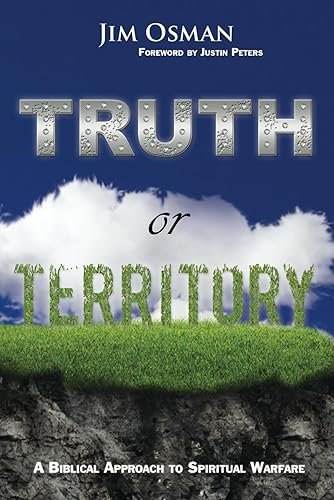
Jim Osman, a cessationist pastor from Kootenai, Idaho, wrote Truth or Territory to argue that the dominant model of spiritual warfare in much of the modern church is not biblical. He contends that what passes for spiritual warfare in many charismatic and even some mainstream evangelical churches -- strategic-level warfare, territorial spirits, binding and loosing, identificational repentance, prayer walking, spiritual mapping -- is built on a thin biblical foundation supplemented by a thick layer of speculation, experience, and extrabiblical teaching. His thesis is captured in the title: true spiritual warfare is about truth, not territory. It is fought with doctrine, obedience, and faithfulness to Scripture -- not with dramatic confrontations with the demonic.
Osman begins by surveying the popular spiritual warfare literature and the practices it has spawned. He traces the modern spiritual warfare movement to several key figures and books, including Frank Peretti's novels (This Present Darkness), C. Peter Wagner's teachings on strategic-level spiritual warfare, and the broader Third Wave and New Apostolic Reformation movements. He documents the practices these teachings have produced: prayer walks aimed at driving demons from specific locations, spiritual mapping exercises that identify demonic principalities over cities, binding prayers directed at territorial spirits, and identificational repentance ceremonies where Christians confess the historical sins of their city or nation to break alleged demonic control.
Where Is This in the Bible?
Osman then asks a simple but devastating question: Where is this in the Bible? He walks through the New Testament's teaching on spiritual warfare with careful exegesis and argues that the dominant model bears little resemblance to what Scripture actually describes. His primary text is Ephesians 6:10-18, the famous "armor of God" passage. Osman notes that Paul's metaphors are overwhelmingly defensive: the belt of truth, the breastplate of righteousness, the shield of faith, the helmet of salvation. The only offensive weapon mentioned is the sword of the Spirit, which is the Word of God. The posture Paul describes is standing, withstanding, and resisting -- not advancing, binding, or conquering territorial spirits.
Osman argues that this defensive orientation is consistent with the rest of the New Testament's teaching. James 4:7 says to resist the devil and he will flee. First Peter 5:8-9 says to be sober-minded, alert, and firm in faith against the adversary. Nowhere does the New Testament instruct believers to identify, name, bind, or rebuke territorial spirits. Nowhere does it teach that demons control geographic regions in a way that requires Christian military-style campaigns to displace them. The one passage that is sometimes cited -- Daniel 10, where an angel describes being delayed by "the prince of Persia" -- is a narrative about angelic warfare, not an instruction to believers about how to pray. Osman argues that extracting a prayer methodology from Daniel 10 is a classic example of confusing narrative description with normative prescription.
Binding, Loosing, and Strongholds
Osman is equally critical of the "binding and loosing" interpretation that undergirds much spiritual warfare practice. He argues that Jesus' words in Matthew 16:19 and 18:18 about binding and loosing are not about binding demons but about the authority of the church to make doctrinal and disciplinary decisions -- a use well attested in Jewish rabbinical literature. To "bind" in this context means to declare something forbidden; to "loose" means to declare something permitted. Osman marshals Jewish background evidence and the broader context of Matthew to support this reading and argues that the charismatic interpretation -- where "binding" means commanding a demon to stop operating -- has no exegetical foundation.
The book also addresses the concept of "spiritual strongholds," drawing on 2 Corinthians 10:3-5. Many spiritual warfare teachers interpret strongholds as demonic fortresses that must be torn down through aggressive spiritual combat. Osman argues that Paul is talking about ideological strongholds -- arguments, speculations, and patterns of thought that set themselves up against the knowledge of God. The weapons Paul describes are not prayers of binding or spiritual mapping exercises; they are the proclamation of truth, the demolition of false ideas, and the faithful preaching of the gospel. The battleground, Osman contends, is the mind, not the atmosphere above a city.
What the Bible Actually Teaches
One of the book's most practically significant contributions is Osman's analysis of what the Bible actually tells believers to do in relation to the demonic. His answer is surprisingly simple: believe the truth, resist the devil, put on the armor of God, pray, and live in obedience to Christ. The New Testament does not give believers a complex methodology for engaging the demonic realm. It does not teach Christians to speak directly to demons (with the exception of the apostles and Jesus, who exercised unique authority). It does not instruct us to identify demons by name, discover their rank, or map their territories. The consistent instruction is to stand firm in truth and trust God to fight the spiritual battle that is beyond our capacity.
Osman acknowledges that demons are real, that spiritual warfare is real, and that Satan actively opposes the work of God. He is not minimizing the battle. He is arguing that the battle is fought differently than much of the church has been taught. The primary weapon is truth -- the Word of God faithfully believed, proclaimed, and obeyed. The primary posture is defensive -- standing firm in the position Christ has won rather than trying to advance into territory that Christ has already conquered through the cross.
The Pastoral Damage
He also addresses the pastoral damage that unbiblical spiritual warfare practices can cause. He describes believers who live in constant fear of the demonic, who are paralyzed by the thought that they might have failed to bind the right spirit or pray the right prayer. He describes churches where every problem is attributed to demonic activity -- where personal sin is reframed as demonic oppression, where counseling is replaced by deliverance sessions, and where the gospel of Christ's finished work is overshadowed by an ongoing war that believers never seem to win. Osman argues that this is not freedom -- it is bondage masquerading as spiritual warfare.
The book closes with Osman's positive vision for biblical spiritual warfare: a life of faith, holiness, truth, and prayer. He calls the church to trade the spectacle of dramatic demonic encounters for the quiet power of a life conformed to Christ. He calls pastors to teach their congregations the sufficiency of Scripture and the finality of Christ's victory. He calls believers to stop fearing the devil and start trusting the God who has already defeated him.
Truth or Territory will resonate strongly with cessationists and with any believer who has felt uneasy about the more extreme practices of the spiritual warfare movement. Continuationists who affirm deliverance ministry and the reality of territorial spirits will push back on Osman's conclusions, but even they will benefit from his careful exegetical work, which forces every reader to distinguish between what the Bible actually teaches and what has been built on top of it.