Summary
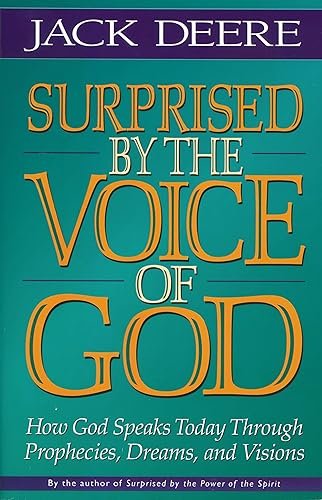
In Surprised by the Voice of God, Jack Deere picks up where his first book left off. Having made the case in Surprised by the Power of the Spirit that miraculous gifts continue today, Deere now zeroes in on one specific and deeply controversial question: Does God still speak to His people outside of Scripture? Not in contradiction to Scripture -- Deere is emphatic about that -- but in addition to it. Through prophecy, dreams, visions, impressions, and what some call "the still small voice," does the living God communicate specific, personal, timely words to believers today?
For Deere, the answer is an unequivocal yes, and this book is his attempt to explain why he believes that, how it works, and what safeguards are necessary to practice hearing God's voice without falling into subjectivism or deception.
The Biblical Foundation
Deere begins by establishing the biblical foundation. Throughout both Old and New Testaments, God speaks. He speaks audibly to Abraham, in dreams to Joseph, through a burning bush to Moses, in a still small voice to Elijah, in visions to Isaiah and Ezekiel, and through angels to Mary and Joseph. The New Testament church is marked by prophecy -- Acts 2 records Peter quoting Joel's promise that in the last days, sons and daughters would prophesy, old men would dream dreams, and young men would see visions. Paul instructs the Corinthian church to eagerly desire the gift of prophecy. The book of Acts is filled with moments where the Holy Spirit gives specific direction: Philip is told to approach the Ethiopian's chariot, Peter receives a vision about Gentile inclusion, Paul is redirected by the Spirit away from Asia and toward Macedonia.
Deere's central argument is that there is no biblical text indicating that this kind of divine communication was meant to stop. The Bible never says God would cease speaking through these means once the canon was complete. Cessationists argue that the completion of Scripture made ongoing revelation unnecessary, but Deere challenges this on multiple fronts. First, he notes that the sufficiency of Scripture -- a doctrine he affirms -- means that the Bible is our final authority for faith and practice, not that the Bible is the only way God communicates. A father might have a family handbook that governs his household, but he still speaks to his children daily. The handbook does not replace the relationship; it provides the framework for it. Second, Deere observes that the New Testament itself anticipates ongoing prophetic speech. Paul's instructions about how to weigh prophecy in 1 Corinthians 14 make no sense if prophecy was about to cease within a generation.
Levels of Divine Communication
A significant portion of the book deals with the practical mechanics of hearing God's voice. Deere is careful to distinguish between different levels of divine communication. At the highest level is Scripture itself -- inspired, inerrant, authoritative, and binding on all believers. Below that are prophetic words, impressions, and other forms of communication that are real and meaningful but do not carry the authority of Scripture. They must be tested, weighed, and submitted to the community of faith. Deere is clear that no modern prophetic word should ever be treated as equivalent to the Bible. If someone claims a word from God that contradicts Scripture, it is false -- full stop.
This distinction is crucial, and Deere spends considerable time on it because it addresses one of the primary concerns of cessationists: if you open the door to ongoing revelation, do you not undermine the authority and sufficiency of the Bible? Deere says no -- as long as you maintain the proper hierarchy. Scripture is the supreme and final authority. Prophetic words, dreams, and impressions are subordinate to it and must always be judged by it. He compares this to the relationship between preaching and Scripture: a sermon can be Spirit-inspired, genuinely helpful, and even life-changing, but it is not Scripture. We do not reject preaching because it might sometimes be wrong; we test it against the Word. The same principle applies to prophecy.
How God Speaks Today
Deere draws extensively on his own experience and the experiences of others to illustrate how God speaks today. He tells stories of prophetic words that provided specific guidance at critical moments -- words that named details no one could have known naturally, that confirmed decisions, that brought healing and reconciliation. He also tells stories of prophetic words that were wrong or partially wrong, and he uses these as teaching moments. Getting a prophetic word wrong, he argues, does not mean the gift itself is invalid. It means the person exercising it is human, fallible, and still learning. Paul told the Corinthians to weigh prophecy precisely because not every prophetic utterance would be perfectly accurate. The existence of the testing process presupposes the possibility of error.
This is one of the more controversial aspects of Deere's argument, and he knows it. Cessationists argue that true prophecy must be infallible -- if a prophet gets anything wrong, they are a false prophet. Deere pushes back, arguing that this standard applies to Old Testament canonical prophecy but not to the kind of congregational prophecy Paul describes in 1 Corinthians 12-14. In the New Testament church, prophecy was a gift exercised by ordinary believers, and it was subject to evaluation by the community. This is a fundamentally different category than Isaiah or Jeremiah speaking as covenant mediators for the nation of Israel.
Dreams, Visions, and Obstacles
The book also addresses dreams and visions, which Deere treats as legitimate channels of divine communication. He points to the biblical pattern -- God spoke through dreams to Jacob, Joseph, Daniel, and many others -- and argues that there is no reason to believe this has stopped. He shares accounts of people who received direction, warning, or encouragement through dreams, while also cautioning that not every dream is from God. Dreams can come from indigestion, anxiety, or the subconscious mind, and discernment is required. Deere offers practical guidance for evaluating whether a dream or vision is genuinely from the Lord: Does it align with Scripture? Does it bear good fruit? Does the community of faith confirm it? Does it lead toward Christ or away from Him?
A particularly helpful section addresses the obstacles to hearing God's voice. Deere identifies several: theological prejudice (the conviction that God no longer speaks this way), unconfessed sin, busyness, fear of being wrong, and a rationalistic worldview that leaves no room for the supernatural. He is especially incisive on the last point. Western evangelicalism, he argues, has been deeply shaped by Enlightenment rationalism, which values logic, evidence, and systematic thinking but is suspicious of subjective experience, intuition, and mystery. This rationalistic bent has made many Western Christians functionally deaf to the Spirit's voice -- not because God is not speaking, but because they have been trained not to listen.
Safeguards and Pastoral Vision
Deere is careful to balance his enthusiasm with warnings. He devotes chapters to the dangers of pursuing spiritual experience apart from Scripture, the destructive potential of ungoverned prophecy, and the importance of character and humility in those who claim to hear from God. He tells cautionary stories alongside the encouraging ones. He acknowledges that the charismatic world has produced charlatans and manipulators, and he does not excuse this. But he refuses to let the abuses silence the gift. The New Testament pattern is clear: the church is meant to be a prophetic community, alive with the voice of the Spirit, guided by the Word, and accountable to one another.
For church leaders, the practical implications are significant. If Deere is right, then creating space for prophetic ministry is not optional -- it is part of the church's calling. But it must be done wisely. Deere advocates for training in prophecy, structured opportunities for prophetic words to be shared and tested, pastoral oversight of prophetic ministry, and a culture of humility where people can practice hearing God's voice without fear of shame if they get it wrong. He envisions a church where Scripture reigns supreme, the Spirit is actively pursued, and every believer grows in the ability to discern God's leading.
Whether you find Deere's arguments persuasive or not, this book raises questions that every serious Christian must grapple with. If God is alive, is He silent? If the Spirit dwells in every believer, does He communicate only through a book written two thousand years ago, or does He also whisper in the present? Deere's answer -- rooted in Scripture, tested by experience, and offered with both conviction and humility -- is that the God who spoke has not stopped speaking, and the church that learns to listen will be the richer for it.