Summary
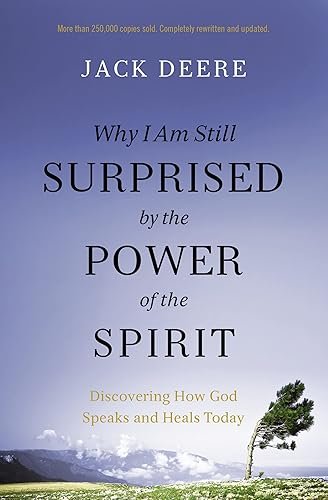
Few books on the continuation of spiritual gifts carry the weight of personal transformation quite like Jack Deere's Surprised by the Power of the Spirit. Deere was not a lifelong charismatic who grew up expecting miracles. He was a professor at Dallas Theological Seminary -- one of the most prominent institutions in the cessationist tradition -- who taught that the miraculous gifts of the Holy Spirit ended with the death of the last apostle. His journey from that conviction to a full embrace of the Spirit's present-day power gives this book a credibility and emotional resonance that purely academic treatments often lack.
From Cessationist Professor to Spirit-Filled Believer
Deere opens with his own story. He describes his years of rigorous theological training, his confidence in the cessationist framework, and his genuine love for Scripture. He was not opposed to the Holy Spirit; he simply believed, as he had been taught, that certain gifts -- healing, prophecy, tongues, miracles -- belonged to the apostolic era and served a specific purpose: to authenticate the apostles and the writing of the New Testament canon. Once that purpose was fulfilled, those gifts were withdrawn. It was a tidy, intellectually satisfying system. And then it fell apart.
The turning point came through relationships rather than arguments. Deere encountered believers who operated in prophetic and healing gifts in ways that he could not dismiss as psychological manipulation, emotional excess, or theological ignorance. He watched people receive specific, accurate prophetic words. He witnessed healings that defied his categories. More importantly, the people doing these things were biblically grounded, Christ-centered, and humble -- not the caricatures he had been warned about. This forced him back to the Scriptures with fresh eyes and honest questions.
Reexamining the Biblical Text
What Deere found when he reexamined the biblical text surprised him. He realized that cessationism -- the belief that miraculous gifts ceased -- was not actually taught in the Bible. It was an inference, a theological conclusion drawn from certain assumptions about church history and the purpose of miracles, but the New Testament itself never says that these gifts would end. The key passage cessationists cite, 1 Corinthians 13:8-10, speaks of a time when prophecy, tongues, and knowledge will pass away "when the perfect comes." Deere argues persuasively that "the perfect" refers to the return of Christ and the fullness of the age to come, not the completion of the New Testament canon. The early church fathers, he notes, did not interpret this passage as cessationists do.
The Historical Evidence
Deere devotes significant attention to the historical argument. Cessationists often claim that miracles disappeared after the apostolic age, but Deere demonstrates that this claim does not hold up under scrutiny. He surveys the writings of church fathers like Irenaeus, Tertullian, Origen, and Augustine -- all of whom reported miraculous occurrences in their day. Augustine, in particular, is a fascinating case: earlier in his career, he expressed skepticism about ongoing miracles, but by the time he wrote The City of God, he had catalogued dozens of healings and miraculous events he had personally investigated. Deere uses this historical evidence not to prove that every reported miracle was genuine, but to show that the church has never had a uniform cessationist tradition. The miraculous has always been part of the Christian experience, even if unevenly distributed across time and geography.
The Real Reasons People Reject the Gifts
A particularly powerful section of the book addresses what Deere calls the "real reasons" people reject the miraculous gifts. He argues that the cessationist position is often driven less by exegesis and more by experience -- or, more precisely, by the absence of experience. Many evangelicals have never seen a genuine miracle, so they construct a theology that explains why they should not expect to see one. Deere is gentle but direct: he suggests that fear, control, and intellectual pride can masquerade as faithfulness to Scripture. He is not saying all cessationists are prideful, but he is asking honest questions about what drives the conviction.
At the same time, Deere is not naive about the abuses in the charismatic movement. He acknowledges the excesses, the failed prophecies, the manipulative healing services, the theological shallowness that sometimes accompanies an emphasis on spiritual experience. He insists that these abuses are reasons for discernment, not reasons for cessation. The solution to misuse is proper use, not no use. He draws an analogy to preaching: there are terrible, manipulative, heretical preachers in the world, but nobody argues that preaching should therefore stop. The same logic, Deere contends, should apply to prophecy, healing, and other gifts.
The Theological Core
The book's theological core rests on several pillars. First, Deere argues that the New Testament presents the Holy Spirit as the ongoing, dynamic presence of God in the church -- not a force that operated at full power for one generation and then shifted into a diminished mode. The same Spirit who raised Jesus from the dead lives in every believer, and there is no biblical reason to assume He operates with less power today than He did in Corinth or Ephesus. Second, Deere argues that the gifts of the Spirit are given for the building up of the church, and the church still needs building up. The needs that prophecy, healing, and other gifts address -- the need for guidance, comfort, physical restoration, and supernatural encouragement -- have not disappeared. Third, Deere points to the global church, where miraculous gifts are experienced regularly in Africa, Asia, and Latin America. If cessationism is true, he asks, why is the Spirit apparently still distributing gifts to millions of believers around the world?
Practical Application and Personal Cost
Deere also addresses the practical question of how to approach the gifts today. He does not advocate for a free-for-all. He emphasizes the importance of biblical grounding, pastoral oversight, humility, and accountability. He warns against building your theology on experience alone, even as he insists that experience should not be excluded from the conversation. The ideal, in Deere's view, is a both/and approach: deep commitment to Scripture and openness to the Spirit's present-day activity.
The book's final chapters are deeply personal. Deere describes the cost of his theological shift -- the loss of his position at Dallas Seminary, strained friendships, and the disorientation of having his entire theological framework rearranged. But he also describes the gains: a deeper relationship with God, a richer prayer life, and a sense of awe at what the Spirit is doing in the world. His tone throughout is not triumphalist but testimonial. He is not trying to win an argument; he is telling you what happened to him and inviting you to consider whether God might surprise you, too.
For pastors and church leaders navigating the cessationist-continuationist divide, this book is essential reading -- not because it settles every question, but because it models intellectual honesty. Deere was willing to follow the evidence where it led, even when it cost him dearly. Whether you end up agreeing with him or not, his journey challenges every reader to ask: Am I reading the Bible to find truth, or am I reading it to confirm what I already believe?