The Question Behind Every Other Question
There is a question that every human being eventually asks. It is not an academic question. It is the question you ask at 2 a.m. in the hospital hallway. It is the question that surfaces at the graveside, after the diagnosis, after the phone call that changes everything. The question is this: Is God in control?
And if He is — if God truly governs all things — then why this? Why now? Why them?
Christians have wrestled with this question for two thousand years. They have not arrived at one answer. They have arrived at several — each with serious biblical support, each with profound pastoral implications, and each held by brilliant, faithful believers who love the same Scriptures and worship the same Christ.
The Scroll has assembled eleven books representing every major perspective on divine providence. Not so you can pick a team. So you can think deeply instead of merely reacting. Because when suffering comes — and it will — you will need a theology that can bear the weight.
The Reformed View: God Is Sovereign Over All Things
The Reformed tradition, rooted in the theology of John Calvin and Martin Luther, teaches the most robust doctrine of divine sovereignty in Christian thought. The claim is breathtaking in its scope: nothing happens apart from the decree of God. Not a sparrow falls, not a hair is numbered, not a king is enthroned, not a child suffers — apart from the sovereign will of the One who governs all things.
This does not mean God is the author of sin. The Reformed tradition has always been careful to distinguish between God's decretive will (what He ordains) and His preceptive will (what He commands). God ordains that evil will occur — He permits it, governs it, and limits it — but He is not morally culpable for it. The creature who commits the sin bears the guilt. God, who governs the creature, bears the sovereignty.
Calvin himself addressed this in extraordinary depth. His [Institutes of the Christian Religion](/library/institutes-of-the-christian-religion) devotes extensive sections to providence, arguing that God's governance extends to every detail of creation. Nothing is left to chance. Nothing is random. Nothing is outside His control. In [The Secret Providence of God](/library/the-secret-providence-of-god), Calvin responds directly to critics who accused him of making God the author of evil, offering one of the most careful defenses of meticulous providence ever written.
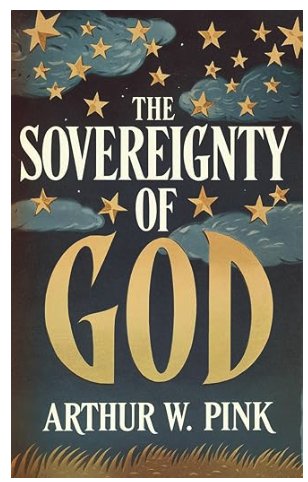
A.W. Pink's [The Sovereignty of God](/library/the-sovereignty-of-god) is the most accessible modern statement of this position. Pink writes with the confidence of a man who has found the doctrine that explains everything — and his book has brought comfort to millions who needed to know that their suffering was not meaningless.
Martin Luther's [The Bondage of the Will](/library/the-bondage-of-the-will) attacks the question from a different angle: the human will. Luther argues against Erasmus that the will is bound by sin and that God alone determines who will be saved. If God does not control salvation, Luther insists, then no one can have assurance. The book remains one of the most powerful theological arguments ever written.
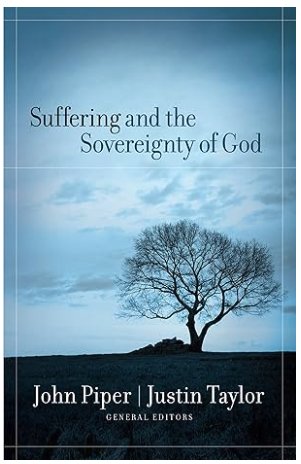
John Piper brings the Reformed view into the contemporary church with [Suffering and the Sovereignty of God](/library/suffering-and-the-sovereignty-of-god). This is perhaps the most pastoral book on this list — written not for the classroom but for the person in the waiting room, the parent at the funeral, the believer whose world has collapsed. Piper's argument is that God's sovereignty does not make suffering worse. It makes suffering bearable. Because if God is in control, then nothing — absolutely nothing — is wasted.
The comfort of the Reformed view is total: if God governs all things, then there is no such thing as meaningless suffering. Every tear has a purpose. Every loss serves a plan. You may not see it now. But the God who numbers the hairs on your head has not lost count.
The Arminian View: God Is Sovereign but Grants Genuine Freedom
The Arminian tradition, named after Jacobus Arminius (1560-1609), affirms God's sovereignty but understands it differently. God is omnipotent, omniscient, and supreme over all creation — but He has chosen, out of His own sovereign freedom, to grant His creatures genuine libertarian free will. God does not merely permit choices. He creates beings who genuinely choose.
This means that God foreknows all things — He sees the future exhaustively — but He does not foreordain every event. He knows what you will choose, but your choice is genuinely yours. Prevenient grace (grace that "comes before") restores enough freedom to every person that they can respond to the gospel. Grace enables but does not compel.
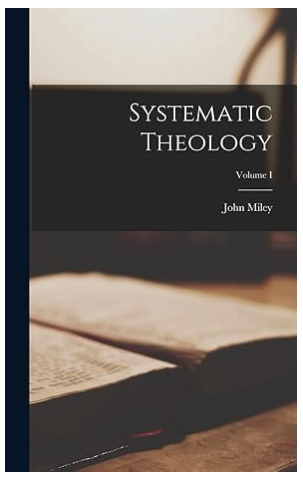
John Miley's [Systematic Theology](/library/systematic-theology-miley) provides the most thorough classical Arminian treatment of these questions. Miley argues that God's governance of the world is real but non-deterministic. God works through persuasion, invitation, and enabling grace rather than through irresistible decree. Human freedom is not an obstacle to God's plan — it is part of God's plan.
The comfort of the Arminian view is deeply personal: God is not the cause of your suffering. He did not decree the cancer, the accident, the betrayal. He is with you in it. He weeps with those who weep. And He is powerful enough to bring good out of evil without having secretly authored the evil in the first place.
The Open Theism View: God Fights Against Evil
Open theism is the most recent and most controversial of the major positions on providence. Pioneered by theologians like Clark Pinnock, John Sanders, and Gregory Boyd, it argues that God is genuinely omnipotent but has voluntarily limited His control over creation in order to grant creatures genuine freedom — including the freedom to create outcomes that God does not desire.
The most striking claim of open theism is that the future is partly open. God knows all possibilities exhaustively, and He knows His own plans perfectly, but the free decisions of creatures introduce genuine novelty into the world. God does not know with certainty what a free creature will choose, because there is nothing yet to know — the future does not yet exist as a fixed reality.
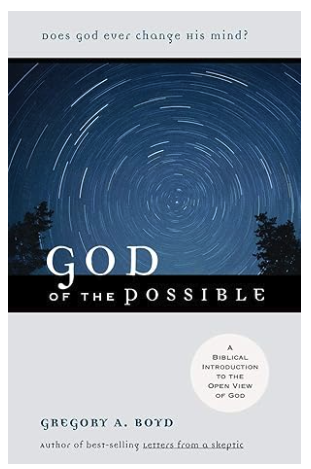
Gregory Boyd's [God of the Possible](/library/god-of-the-possible) lays out the biblical and philosophical case for this position with clarity and conviction. In [Is God to Blame?](/library/is-god-to-blame), Boyd turns to the pastoral dimension — the question of suffering. His answer is striking: God is not behind your suffering. He is fighting against it. Evil is the result of rebellious wills — human and spiritual — and God is at war with it, not secretly orchestrating it.
The comfort of open theism is radical: God is entirely on your side. Your suffering is not part of a secret plan. It is the enemy's work, and God hates it more than you do. He is not the chess master moving pieces. He is the warrior-king fighting to redeem a world that has been broken by rebellious freedom.
The Puritan Pastoral Approach: Trust in the Details
The Puritans did not have the luxury of treating providence as an abstract theological question. They lived with suffering as a daily companion. Plague swept through their cities. Persecution drove them from their homes. Poverty was constant. Infant mortality was staggering. If their theology of providence did not work in the real world, it was useless.
John Flavel's [The Mystery of Providence](/library/the-mystery-of-providence) is one of the most beautiful books ever written on this subject. Flavel teaches believers to trace God's hand in the ordinary details of daily life — in the timing of events, in unexpected deliverances, in the way circumstances conspire to accomplish what no human planning could achieve. For Flavel, providence is not a doctrine you debate. It is a reality you observe, if you have eyes to see.
John Piper's [Desiring God](/library/desiring-god), while not strictly a Puritan work, stands firmly in the Puritan tradition of finding joy in God's sovereign governance. Piper's thesis — that God is most glorified in us when we are most satisfied in Him — is pure Puritan logic applied to the modern church. The Puritans would have recognized it immediately and said amen.
The Multi-View Conversation: Four Scholars, Four Perspectives
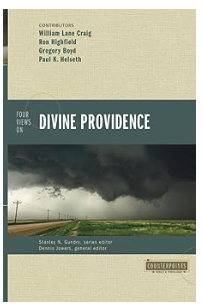
If you want to see all of these perspectives in genuine dialogue with each other, there is one book that stands above the rest. [Four Views on Divine Providence](/library/four-views-divine-providence) brings together four scholars — representing Reformed, Molinistic, Open Theist, and simple-foreknowledge Arminian positions — and lets them make their case and respond to each other.
This is not a debate where one side wins. It is a conversation where every participant is forced to deal with the strongest arguments against their position. You will come away with a far more nuanced understanding of the issues, regardless of where you started. If you read only one book on this subject, read this one.
Where to Start
Your starting point depends on where you stand — and where you are hurting.
If you are Reformed or Calvinist: Start with Pink's [The Sovereignty of God](/library/the-sovereignty-of-god) or Calvin's [Institutes](/library/institutes-of-the-christian-religion) to deepen your own convictions. Then read Boyd's [God of the Possible](/library/god-of-the-possible) to engage the strongest objections to your position honestly.
If you are Arminian: Start with Miley's [Systematic Theology](/library/systematic-theology-miley) for the classical foundation. Then read Piper's [Suffering and the Sovereignty of God](/library/suffering-and-the-sovereignty-of-god) to understand the strongest case for meticulous sovereignty.
If you are exploring: Start with [Four Views on Divine Providence](/library/four-views-divine-providence). It is the most balanced single resource available, and it will help you see the landscape before you commit to a trail.
If you are suffering right now: Start with Piper's [Suffering and the Sovereignty of God](/library/suffering-and-the-sovereignty-of-god). Whatever your theological convictions, this book meets you in the darkness and offers a God who is big enough to hold your pain and purposeful enough to redeem it.
The Scroll does not take sides. We take books seriously.
A Question You Live
The question of providence is not one you solve. It is one you live. Every day you wake up and face a world that is beautiful and broken, ordered and chaotic, full of grace and full of grief — you are living inside this question whether you have articulated it or not.
Whatever your conviction, hold it with humility. Brilliant, faithful, Scripture-saturated Christians have landed in different places on this question for two millennia. That should make you slow to dismiss and quick to listen.
The books are here. The summaries are ready. Eleven volumes representing the best thinking from every major tradition. Read them. Wrestle with them. Let them challenge what you think you know.
Then go live your answer. Redeem your scroll.