Summary
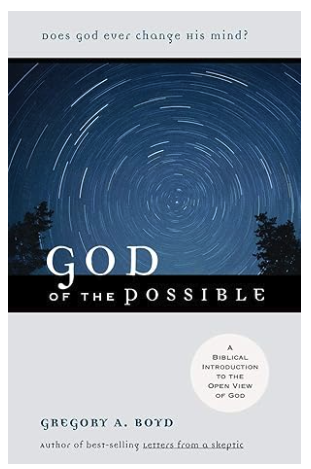
Gregory Boyd published God of the Possible in the year 2000, and it immediately became the foundational text of Open Theism, one of the most controversial theological developments in recent evangelical history. Boyd, a pastor, professor, and prolific author, set out to ask a question that had been simmering in evangelical scholarship for decades. Does God know the future exhaustively and in every detail, or is the future partly open, even to God?
Boyd's answer shook the evangelical world. He argued that the future is not a settled reality that God simply observes in advance. Rather, the future is partly open and partly settled, and God knows it as it actually is. God knows everything that can be known. But future free decisions, because they have not yet been made, do not yet exist as settled facts. They exist as possibilities. And God, in His infinite wisdom, knows every possibility perfectly.
The Classical View and Its Problems
Boyd begins by presenting the traditional view of divine foreknowledge, what he calls the classical view. In this view, God knows the entire future exhaustively, including every free decision every person will ever make. This view has been the dominant position in Christianity for most of its history, defended by Augustine, Aquinas, Calvin, and most Protestant and Catholic theologians.
Boyd treats this view with respect but raises serious questions. If God has always known exactly what every person will do, in what sense are their decisions genuinely free? And if every detail of the future is eternally settled in God's mind, in what sense is prayer meaningful? Does it change anything, or is it merely a scripted part of a predetermined story?
He also raises the problem of evil. If God knew before creating the world that millions would suffer horrific evil, and if He had the power to create a world without that evil but chose not to, how do we maintain that God is genuinely loving? The classical view, Boyd argues, has struggled with this question for centuries, and the answers it produces often sound more like philosophical gymnastics than biblical truth.
Boyd carefully examines the philosophical assumptions underlying the classical position. He notes that the concept of exhaustive definite foreknowledge owes as much to Greek philosophy as it does to Scripture. Plato and Aristotle shaped the categories through which early church fathers read the Bible, and those categories may not be as biblical as we assume. Boyd invites readers to set aside philosophical presuppositions and let the Bible speak on its own terms.
The Open View of the Future
Boyd then presents his alternative: the Open View of God, or Open Theism. He argues that God is omniscient, meaning God knows everything that can be known. But future free decisions of free agents are not yet settled realities. They are genuine possibilities. God knows them as possibilities, not as certainties.
This does not mean God is ignorant or limited. Boyd insists that God knows every possible future, every possible decision, every possible outcome, with perfect clarity. God is infinitely intelligent, infinitely resourceful, and perfectly prepared for every contingency. The difference is that God relates to the future as a realm of genuine possibilities rather than a fixed script.
Boyd draws support from numerous biblical passages. He points to texts where God says "if," suggesting genuine contingency. He cites passages where God changes His mind or relents, such as Exodus 32, where God relents from destroying Israel after Moses intercedes. He highlights Jeremiah 18, where God says that if a nation repents, He will relent from planned judgment. Boyd argues these passages should be taken at face value rather than explained away as mere anthropomorphism. He walks through dozens of Old Testament texts where God expresses surprise, disappointment, or a change of intention, and he asks a simple question: why would Scripture consistently portray God this way if it were not, in some meaningful sense, true?
Boyd also engages with the New Testament. He examines passages where Jesus expresses genuine emotion, genuine uncertainty about human responses, and genuine invitation that assumes the outcome is not yet determined. The parable of the talents, for instance, portrays a master who genuinely does not know what his servants will do with what they have been given until they report back. Boyd sees in these narratives a God who is relational, responsive, and engaged in a real-time partnership with His creation.
What This Means for Prayer
One of the most compelling sections is Boyd's treatment of prayer. In the classical view, Boyd argues, prayer cannot actually change anything because everything is already settled. But in the Open View, prayer is genuinely powerful. When we pray, we are participating in a future that is not yet determined. Our prayers can make a real difference. God has sovereignly chosen to create a world in which the prayers of His people genuinely matter.
Boyd walks through biblical examples of prayers that changed outcomes. Moses interceded and God relented from destroying Israel. Abraham bargained with God over the fate of Sodom. Hezekiah prayed and God added fifteen years to his life. These are not scripted dialogues with predetermined outcomes, Boyd argues. These are genuine interactions in which the prayers of human beings influenced the actions of God. If the future were exhaustively settled, these prayers would be nothing more than theater. But if the future is partly open, prayer becomes one of the most powerful forces in the universe.
What This Means for Evil and Suffering
Boyd addresses the problem of evil with pastoral sensitivity. In the Open View, God did not specifically plan or foreknow every instance of suffering. Rather, God gave His creatures, both human and angelic, genuine freedom. And that freedom has been used for both good and evil. When evil occurs, God is not the secret author of it. God genuinely grieves over evil and genuinely wars against it.
Boyd connects this to the warfare worldview he develops more fully in other works. The Bible portrays a cosmic conflict between God and the forces of darkness. Suffering is not God's plan being executed. It is the collateral damage of a war that God is winning but that involves real casualties. This does not mean God is powerless. It means God has chosen to create a world where love, freedom, and risk coexist, because genuine love requires genuine freedom, and genuine freedom entails the possibility of genuine harm.
Boyd also addresses the emotional and pastoral dimension of suffering. He describes sitting with parents who lost a child and being told that God planned their child's death for a greater purpose. Boyd found this not only theologically problematic but pastorally devastating. In the Open View, he can say something different: God did not plan this tragedy. God grieves with you. And God is working right now to bring redemption out of what evil has done. This pastoral posture, Boyd believes, is more faithful to the God revealed in Jesus Christ.
The Controversy and the Response
Boyd is transparent about the controversy his view has generated. He acknowledges that Open Theism has been rejected by many evangelical theologians and denominations. The Evangelical Theological Society debated whether to expel him. Many Reformed theologians have written sharp critiques, arguing that Open Theism undermines God's sovereignty, contradicts key Scripture passages about God's foreknowledge, and leads to a diminished view of God.
Boyd responds to these critiques carefully. He argues that his view actually enhances God's sovereignty by portraying a God who is so confident, so wise, and so powerful that He does not need to control every detail to accomplish His purposes. A chess master who can win no matter what the opponent does is more impressive than one who has scripted every move in advance. Boyd also argues that the classical view faces its own serious problems, particularly around the problem of evil and the genuineness of human freedom, which Open Theism resolves more naturally.
Whether you agree with Boyd or not, this book raises questions that deserve serious engagement. It has forced the entire evangelical world to think more carefully about what we mean when we say God knows the future. It challenges comfortable assumptions and invites honest wrestling with texts that many theologians have been too quick to explain away.