Summary
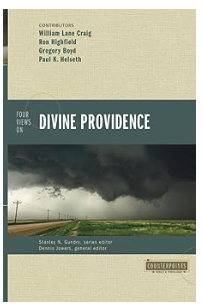
Four Views on Divine Providence is part of the Zondervan Counterpoints series, published in 2011. It brings together four leading scholars who represent four distinct Christian perspectives on how God governs the world. Each scholar presents his own view, and each responds to the others, creating a lively and illuminating theological conversation. This is one of the most balanced and accessible treatments of the providence debate available. Rather than advocating for a single position, the book lets each voice speak in its own terms and face genuine pushback from the others.
The value of this format cannot be overstated. Most theology books present one perspective and demolish the alternatives. This book lets each scholar make his strongest case, and then subjects that case to the sharpest criticism his peers can offer. The result is not a neat resolution but something more valuable: a genuine understanding of why thoughtful, committed Christians can look at the same Bible and the same world and arrive at fundamentally different conclusions about how God governs.
View One: God Causes All Things — Paul Kjoss Helseth
Paul Kjoss Helseth presents the Reformed or Augustinian position. He argues that God is the ultimate cause of everything that happens. This does not mean God is the direct cause of evil, but it does mean that nothing occurs apart from God's sovereign decree. God ordains, permits, and governs all events, including human decisions, in accordance with His eternal plan.
Helseth draws on the Reformed tradition, particularly Augustine, Calvin, and Jonathan Edwards. He argues that God's sovereignty is exhaustive and meticulous. God does not merely allow events to happen. He actively governs every detail of history for the ultimate display of His glory. This includes the salvation of some and the passing over of others, not because God is cruel but because His sovereign freedom is the ultimate expression of His nature.
On the problem of evil, Helseth argues that God permits evil for wise purposes that may be inscrutable to us but are perfectly just and good in God's eternal plan. He distinguishes between God's moral will, what God commands, and God's decretive will, what God ordains to happen. These can appear to conflict, as when God commands that people not sin while ordaining a world in which sin occurs, but Helseth insists they are compatible at a higher level.
Helseth also addresses the practical implications of his view. If God is sovereign over all events, then the believer has an unshakable foundation for trust in the midst of suffering. Nothing is random. Nothing is wasted. Every event, however painful, is working toward a purpose that will one day be revealed as good, wise, and glorious.
View Two: God Directs All Things — William Lane Craig
William Lane Craig presents the Molinist position, also known as Middle Knowledge. Craig argues that God knows not only everything that will happen and everything that could happen, but also everything that would happen in every possible circumstance. This middle knowledge gives God a comprehensive map of all possible worlds.
Using this knowledge, Craig argues, God chose to create the world that best accomplishes His purposes. God does not directly cause every event, but He orchestrated the circumstances, knowing exactly what free agents would freely choose in those circumstances. This preserves both genuine human freedom and comprehensive divine sovereignty.
Craig's view attempts to walk a middle path between Reformed determinism and Open Theism. God is in total control of the outcome because He chose which possible world to actualize. But human beings make genuinely free choices within that world. The result is a form of sovereignty that does not override freedom but works through it.
On the problem of evil, Craig argues that God could not have created a world with free creatures and no evil, because in every feasible world containing free beings, some would choose to do evil. God chose the world with the optimal balance of good over evil. This does not mean evil is good. It means that the world God actualized contains the best achievable ratio of good to evil, given the constraint of genuine human freedom.
Craig defends Molinism with philosophical rigor. He argues that middle knowledge is the only view that simultaneously preserves divine sovereignty, human freedom, and the genuine efficacy of prayer. If God knows what every creature would freely do in every possible circumstance, then God can arrange circumstances to achieve His purposes without ever overriding anyone's freedom.
View Three: God Controls by Liberating — Ron Highfield
Ron Highfield presents a Barthian or relational theology position. He argues that the traditional way of framing the sovereignty debate, as a tension between divine control and human freedom, is fundamentally misguided. The real question is not how much control God has, but what kind of God we are talking about.
Drawing on Karl Barth, Highfield argues that God's sovereignty is not raw power or control. It is the sovereignty of love. God does not relate to creation as a cosmic controller but as a loving Father who liberates His children into genuine freedom. God's control is not coercive. It is redemptive.
Highfield reframes the entire debate. He argues that both Calvinism and Arminianism are trapped in a philosophical framework that treats sovereignty as a zero-sum game: the more control God has, the less freedom humans have, and vice versa. But if God is the kind of God revealed in Jesus Christ, then divine sovereignty and human freedom are not competing realities. They are complementary dimensions of a God who is love.
On suffering, Highfield argues that God does not explain suffering. God enters it. The cross is God's answer to evil: not a philosophical explanation, but a divine act of solidarity and redemption. Highfield challenges the other contributors to move beyond mechanistic models of sovereignty and toward a Christological understanding of how God relates to the world.
Highfield's contribution is the most theologically creative in the book. He refuses to play by the rules of the traditional debate and instead proposes a new way of asking the question entirely. Whether his approach resolves the issues or simply reframes them is a question each reader must answer.
View Four: God Limits His Control — Gregory Boyd
Gregory Boyd presents the Open Theism position. He argues that God is omnipotent and omniscient but has voluntarily limited His control over creation by granting genuine freedom to His creatures. The future is partly open, consisting of both settled aspects, things God has determined will happen, and open aspects, things that depend on the free decisions of agents.
Boyd argues that this view best accounts for the biblical portrait of a God who genuinely responds to prayer, changes course in response to human action, and is genuinely grieved by evil. He insists that the Open View does not diminish God but enhances our picture of a God so confident in His purposes that He does not need to control every detail.
On evil, Boyd argues that much of the world's suffering results from the misuse of freedom by both human and angelic beings. God does not will or ordain evil. He fights against it. The cross represents God's definitive victory over evil, achieved not through coercive control but through self-sacrificial love. Boyd sees the warfare motif of Scripture as central to understanding providence: God is at war with evil, and the outcome is guaranteed, but the battle is real.
Boyd also addresses the pastoral dimension of his view. He argues that the Open View offers a more authentic pastoral response to suffering than views that portray God as the author or orchestrator of evil. When tragedy strikes, the Open Theist can say: God did not do this. God grieves with you. And God is working to redeem it. Boyd believes this is closer to the heart of Jesus than any view that makes God the hidden cause of suffering.
The Conversation Between Views
What makes this book uniquely valuable is the interaction between the scholars. Each contributor responds to the other three positions, creating a genuine theological dialogue. Helseth challenges Boyd's view of foreknowledge. Craig pushes back on Helseth's determinism. Highfield questions whether Craig's Middle Knowledge is truly coherent. Boyd challenges Highfield to be more specific about how liberating control works in practice.
The result is a rich, nuanced conversation that reveals both the strengths and weaknesses of each position. No single view emerges as the clear winner. Each has genuine biblical and philosophical support. Each faces legitimate objections. And each represents a serious Christian attempt to honor both God's sovereignty and the reality of human experience.
The reader comes away with something rare in theology: genuine understanding of why the debate exists, what each side is trying to protect, and where the real pressure points are. This is not a book that tells you what to think. It is a book that teaches you how to think about one of the deepest questions in all of theology.