The Heavenly Assembly You Were Never Taught About
If you grew up in a typical church, you probably learned about God, angels, and demons. You may have heard about Satan as a fallen angel. But there is an entire layer of the biblical story that most Western Christians have never encountered: the Divine Council.
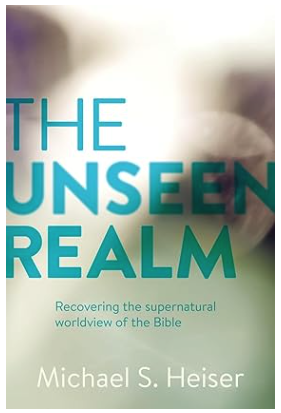
The Divine Council is not a fringe theory or speculative theology. It is a framework drawn directly from the Hebrew Bible, confirmed by the New Testament, and recognized by scholars across the theological spectrum. The scholar who has done the most to bring this to popular attention is Dr. Michael S. Heiser, whose book The Unseen Realm is the essential starting point.
What Is the Divine Council?
In the ancient Near East, it was common to picture the supreme god presiding over an assembly of lesser divine beings. Israel's Scripture uses exactly this framework — but with a critical difference. Yahweh is not merely the chief god among equals. He is the Creator and they are created beings. The council exists because He allows it to exist.
The key text is Psalm 82:1 — God takes His place in the divine assembly; in the midst of the gods He holds judgment. The word translated "gods" is elohim, which in Hebrew can refer to Yahweh, to the members of His council, to the spirits of the dead, or to demons. Context determines the meaning. Here, it refers to spiritual beings who serve in Yahweh's heavenly government.
Other passages fill out the picture. In 1 Kings 22, the prophet Micaiah describes seeing Yahweh on His throne with the host of heaven standing around Him, and a spirit steps forward to volunteer for a mission. In Job 1-2, the "sons of God" present themselves before Yahweh, and the adversary (ha-satan, "the accuser") is among them. In Daniel 10, a heavenly messenger tells Daniel that he was delayed by "the prince of the kingdom of Persia" — a spiritual being assigned to that nation.
The Three Rebellions
Heiser identifies three key rebellions in the biblical story that involve divine council members:
The Eden Rebellion (Genesis 3) — The nachash (serpent/shining one) deceives humanity. This is not merely a talking snake. The Hebrew word nachash is related to words meaning "to shine" and is used elsewhere of divine beings. This was a member of the heavenly host who chose to rebel.
The Watchers Rebellion (Genesis 6:1-4) — The "sons of God" (bene elohim) take human wives and produce the Nephilim. This event is taken up in 1 Enoch, 2 Peter, and Jude. It represents a second, distinct rebellion by divine beings who violated the boundary between heaven and earth.
The Babel Rebellion (Genesis 11 / Deuteronomy 32:8-9) — After the Tower of Babel, God disinherits the nations and allots them to the sons of God (divine council members) to govern. He keeps Israel for Himself. These allotted rulers eventually became corrupt, leading the nations into idolatry. Psalm 82 depicts God judging these beings for their failure.
Why Does This Matter?
The Divine Council framework changes how you read the Bible in several important ways.
First, it recovers the cosmic scope of the biblical story. The conflict between God and evil is not just about human sin. There is an unseen war involving spiritual beings who have their own agency, their own failures, and their own judgment.
Second, it illuminates passages that are otherwise confusing. Why does Paul say we wrestle not against flesh and blood but against principalities and powers? Why does Daniel describe territorial spirits? Why does Psalm 82 call the judges "gods" and then sentence them to die like men? The Divine Council gives these texts a coherent home.
Third, it deepens your understanding of what Jesus accomplished. When Christ ascended and "led captivity captive," He was not speaking metaphorically. He was reclaiming authority that had been usurped by rebellious spiritual powers. The Great Commission — to go to all nations — is the reversal of the Babel event. God is taking back what was given away.
Getting Started
If this is new to you, start with The Unseen Realm by Michael Heiser. It is accessible, well-documented, and draws entirely from the biblical text. Our summary on The Scroll will give you the framework in 12 minutes.
From there, explore our Bible study guides on Genesis (which covers the three rebellions) and the broader Old Testament sections that deal with the council framework.
This is not fringe theology. It is the worldview of the biblical authors. And once you see it, you will find it on nearly every page.