Summary
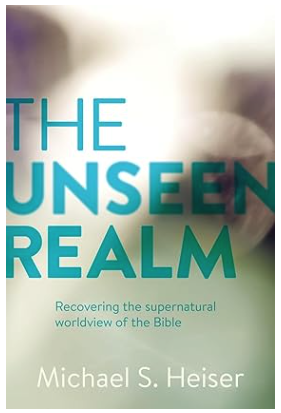
The Unseen Realm is the most important biblical theology book of the twenty-first century, and most Christians have never heard of it. Michael Heiser, a scholar of ancient Semitic languages and the Hebrew Bible who spent fifteen years as Scholar-in-Residence at Logos Bible Software, dedicated his career to studying what the biblical authors actually believed about the supernatural world. What he found is far stranger, far richer, and far more coherent than most modern Christians realize.
Heiser's thesis is simple but explosive: the Bible describes a world populated by a Divine Council, a heavenly assembly of spiritual beings who serve under God's authority. This is not mythology imported into Scripture. It is not pagan contamination. It is what the biblical writers themselves believed and described, from Genesis to Revelation. And once you see it, you cannot unsee it. Every page of Scripture reads differently.
The tragedy, Heiser argues, is that most modern Bible readers have been trained to skip past, explain away, or domesticate the very passages that the ancient Israelites considered essential to understanding who God is and what He is doing in the world. We read the Bible through the lens of the Enlightenment rather than through the lens of the ancient Near East. The Unseen Realm is Heiser's attempt to hand you the right lens.
The Divine Council
The foundation of Heiser's entire framework is Psalm 82, and he opens the book with it. The psalm begins with a scene that most modern readers find deeply uncomfortable: God presides in the great assembly; He renders judgment among the gods. The Hebrew word is elohim. Not angels. Not metaphors. Elohim.
Heiser spends considerable time unpacking the term. In biblical Hebrew, elohim is not a word that means God with a capital G. It is a term for any inhabitant of the spiritual realm. Yahweh is elohim, but not all elohim are Yahweh. The biblical writers used this word to describe the God of Israel, the members of His heavenly council, the gods of the nations, demons, and even the disembodied dead like Samuel's shade in First Samuel 28. What makes Yahweh unique is not that He is the only elohim but that He is incomparable among them. No other spiritual being shares His attributes, His authority, or His nature.
This framework illuminates passages across the entire canon. In First Kings 22, Yahweh holds a council session to decide the fate of King Ahab, and a spirit volunteers to be a lying spirit in the mouths of Ahab's prophets. In Job chapters 1 and 2, the sons of God present themselves before Yahweh, and the Accuser is among them. In Isaiah 6, the prophet sees the Lord enthroned with the seraphim crying Holy, holy, holy. In Daniel 7, the Ancient of Days takes His seat and the court is assembled. These are not isolated curiosities. They are windows into the way the biblical authors understood the cosmos.
The Three Rebellions
Having established the Divine Council, Heiser traces what he calls the three great rebellions that create the problem the rest of the Bible exists to solve.
The first rebellion occurs in Eden. The nachash, the shining serpent figure of Genesis 3, is not a talking snake. He is a divine being, a member of God's council who rebels against his role. He deceives humanity and fractures the relationship between God and His image-bearers. Eden was God's council headquarters on earth, the place where heaven and earth overlapped. The fall shatters that overlap and sets in motion the entire redemptive story.
The second rebellion is the transgression of the Watchers in Genesis 6. The sons of God, divine beings from the heavenly council, cross the boundary between the spiritual realm and the human realm. They take human wives and produce the Nephilim, the giants of the ancient world. This is not a metaphor for the line of Seth marrying the line of Cain, as many modern commentators suggest. Heiser demonstrates that every ancient Jewish reader, every Second Temple text, and the New Testament itself understood this passage as describing the transgression of divine beings. Peter references it. Jude references it. The entire tradition of First Enoch is built around it. The Watchers violated the created order, and the result was catastrophic corruption of both the spiritual and physical realms.
The third rebellion happens at Babel, and this is perhaps Heiser's most paradigm-shifting contribution. In Genesis 11, the nations gather at Babel to build a tower and make a name for themselves. God scatters them. But Heiser directs our attention to Deuteronomy 32, verses 8 through 9, which in the Dead Sea Scrolls reads: When the Most High gave the nations their inheritance, when He divided all mankind, He set the boundaries of the peoples according to the number of the sons of God. But the Lord's portion is His people, Jacob His allotted inheritance.
What happened at Babel was not merely a linguistic judgment. It was a disinheritance. God divided the nations and placed them under the authority of lesser divine beings, members of His council. These beings were supposed to govern justly, but they rebelled. They accepted the worship of the nations for themselves. They became the gods of the nations, the territorial spiritual powers behind the empires of the ancient world. And God chose one family, Abraham's line, as His own portion. Israel would be the vehicle through which He would reclaim what the rebels had taken.
The Cosmic Geography of the Bible
This framework creates what Heiser calls the cosmic geography of the Bible. The nations are under the dominion of rebellious divine beings. Israel is Yahweh's portion. The entire Old Testament is a story of cosmic territorial warfare as Yahweh works through His chosen people to push back the darkness and reclaim the earth.
The conquest of Canaan makes new sense in this framework. The giant clans, the Anakim, the Rephaim, the Emim, are the bloodlines of the Nephilim, the offspring of the Watchers' transgression. The Israelite conquest is not ethnic cleansing. It is the targeted destruction of the physical remnants of the second rebellion, the cleanup of what the Watchers corrupted. Every giant killed is a blow against the forces that sought to corrupt God's creation.
The Psalms come alive in this framework. When the psalmist declares that Yahweh is above all gods, he is not speaking rhetorically. He means it literally. When Israel sings that the gods of the nations are worthless, they are making a theological claim about the divine beings who rule those nations. The entire worship life of Israel is an assertion that Yahweh alone is worthy of the loyalty that the rebel elohim demand.
Jesus as the Reversal of All Three Rebellions
The incarnation, ministry, death, and resurrection of Jesus reverse all three rebellions, and Heiser traces each reversal with meticulous care.
Jesus reverses the first rebellion, Eden. He is the seed of the woman promised in Genesis 3:15 who will crush the serpent's head. His life of perfect obedience in the wilderness, where Israel failed, His resistance of satanic temptation, and His death and resurrection accomplish what Adam failed to do. The nachash is defeated. The curse is broken. The way back to Eden, back to the presence of God, is reopened.
Jesus reverses the second rebellion, the Watchers. In First Peter 3:19, Peter tells us that after His death, Christ went and made proclamation to the spirits in prison who disobeyed long ago in the days of Noah. This is not a gospel invitation. It is a victory declaration. Jesus descends to the imprisoned Watchers and announces that their corruption has been undone. The Nephilim bloodlines were destroyed. The spiritual powers behind them have been judged.
Jesus reverses the third rebellion, Babel. At Pentecost, in Acts 2, the nations hear the gospel in their own languages. This is not a random miracle. It is the deliberate, theologically loaded reversal of Babel. At Babel, God divided the nations and gave them over to lesser gods. At Pentecost, God begins reclaiming the nations through the gospel. The division is being undone. The disinheritance is being reversed. Every tongue that praises Christ at Pentecost is a language reclaimed from the rebel gods who had held it captive since the scattering.
The Great Commission as Cosmic Warfare
This is where Heiser's framework transforms how you read the New Testament. The Great Commission is not just evangelism. It is the cosmic reclamation project that has been building since Babel. When Jesus says go and make disciples of all nations, He is sending His people to do what Israel was always meant to do: reclaim the nations from the spiritual powers that claimed them.
Paul understood this perfectly. In Ephesians 3:10, he writes that through the church, the manifold wisdom of God is made known to the rulers and authorities in the heavenly places. The church's existence, its growth, its witness among the nations is itself a declaration to the rebel divine beings that their time is ending. Every new believer from every nation is a soul reclaimed from the territory the rebels stole at Babel.
The final scene of Revelation completes the picture. The nations stream into the New Jerusalem. The tree of life reappears. Eden is restored, but expanded to encompass the entire earth. The Divine Council is reconstituted with redeemed humanity taking the seats that the rebels vacated. Believers will judge angels, Paul says in First Corinthians 6. We are not just saved from something. We are saved for something: we are destined to take our place in the council of God.
Heiser does not add to Scripture. He removes the modern lens and shows you what was always there. He does not invent a new theology. He recovers an old one, the theology of the biblical writers themselves. And he does it with rigorous scholarship, accessible writing, and a reverence for the text that puts most popular-level Bible books to shame. The Unseen Realm is not easy reading. It challenges assumptions you did not know you had. But if you are willing to sit with it, to let the ancient worldview of the biblical authors reshape your imagination, you will never read your Bible the same way again.