Summary
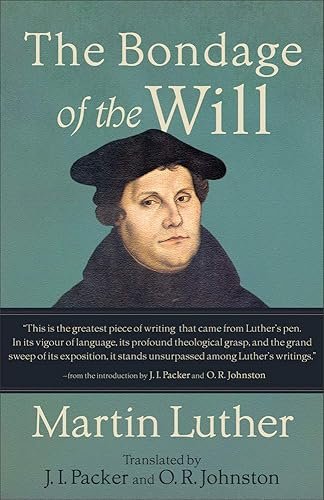
Martin Luther wrote dozens of books, pamphlets, and commentaries. He nailed the Ninety-Five Theses to the church door. He stood before the emperor at the Diet of Worms and declared, Here I stand; I can do no other. He translated the entire Bible into German. But when asked which of his books would endure, Luther pointed to just two: his Small Catechism and The Bondage of the Will. Of the two, he considered The Bondage of the Will his most important theological work.
The book is a direct response to Desiderius Erasmus, the most famous scholar in Europe, who had published a polite, careful treatise called On the Freedom of the Will. Erasmus argued that human beings possess a limited ability to cooperate with God's grace in salvation, that the will, while weakened by sin, is not entirely enslaved. The Catholic Church applauded. The moderates breathed a sigh of relief. And Luther picked up his pen and wrote the most forceful, uncompromising, and theologically explosive response of the entire Reformation.
The Question That Matters Most
Luther begins by thanking Erasmus, with a backhanded compliment, for getting to the heart of the matter. Most of Luther's opponents had attacked him on secondary issues: indulgences, papal authority, purgatory, the veneration of saints. Erasmus alone had aimed at the jugular. The question of free will, Luther declares, is not a peripheral debate. It is the question on which everything else depends.
If the human will is free, if people can, by their own effort, cooperate with God's grace and contribute to their salvation, then Christ died needlessly. Grace becomes a bonus, not a rescue. The cross becomes helpful advice rather than the only hope for a drowning world. But if the will is in bondage, if sin has so enslaved human nature that no one can turn to God without God first acting, then grace is everything, the cross is everything, and God receives all the glory for salvation.
Luther will accept no middle ground. The stakes are too high. He knows that this is not a polite academic disagreement between two scholars. This is the question on which the gospel itself stands or falls. Every other Reformation controversy, indulgences, papal supremacy, the Mass, is ultimately a footnote to this one issue: does salvation rest in God's hands or in ours?
The Bondage of the Will
Luther's central argument is devastating in its simplicity. The human will, after the fall, is not free. It is in bondage to sin. Like a beast of burden, the will is always ridden by one of two riders: God or Satan. It does not choose its rider. It goes where the rider directs.
This does not mean that human beings are not making choices. Luther is not a mechanical determinist. People choose freely in the sense that they do what they want to do. The problem is that what they want is warped by sin. A person enslaved to sin freely chooses sin, not because someone is forcing them, but because their desires are corrupted. The will is free from external coercion but not free from internal corruption.
Luther uses a vivid illustration. Imagine a man who is sick to the point of death. He is free to move his limbs, to speak, to think, in a limited sense. But he is not free to heal himself. He needs a physician. And until the physician comes, his freedom is the freedom to die. That is the freedom of the human will apart from grace: the freedom to sin, and nothing more.
Luther Against Erasmus: The Battle of Worldviews
The clash between Luther and Erasmus is not merely a theological debate. It is a collision between two entirely different visions of Christianity. Erasmus represents the humanist tradition: reasonable, balanced, moderate, willing to leave difficult questions open. He values peace, civility, and ambiguity. He does not want to make strong claims about things Scripture seems to leave uncertain.
Luther represents the Reformation conviction: Scripture is clear, truth is not negotiable, and the stakes of getting this wrong are eternal. Luther has no patience for Erasmus's call for restraint. He accuses Erasmus of being a skeptic disguised as a theologian, a man who would rather keep the peace than speak the truth.
Luther walks through Erasmus's arguments with relentless precision. Erasmus cited passages where God commands people to choose, to repent, to turn from sin, and argued that such commands imply the ability to obey. Luther responds: the commands reveal what we ought to do, not what we can do. The law shows us our duty and our failure. It is a mirror, not a ladder. It reveals how far we fall short and drives us to cry out for grace.
The Necessity of Grace
If the will is in bondage, then salvation must be entirely the work of God. This is the theological heart of the Reformation: sola gratia, grace alone. Luther argues that God does not merely assist the willing; He creates the will to believe. He does not merely offer salvation to those who reach for it; He reaches into the darkness and pulls the dead to life.
Luther grounds this in Scripture with relentless exegetical arguments. He walks through Romans 9, where God says I will have mercy on whom I have mercy. He examines Exodus and the hardening of Pharaoh's heart, showing that God's sovereignty extends even to the decisions of those who oppose Him. He turns to the Gospel of John, where Jesus says no one can come to me unless the Father draws him. In every case, his conclusion is the same: God is the active agent in salvation, and the human will is the passive recipient. Faith itself is a gift.
This is not a cold doctrine. For Luther, this is the most comforting truth in the universe. If salvation depended on his own free will, he would have no assurance. His will is weak, fickle, and corrupted. But if salvation depends on God's will, on the immovable, eternal, sovereign purpose of a God who cannot fail, then nothing can pluck him from the Father's hand. The assurance of the believer rests not on the strength of human commitment but on the faithfulness of divine promise.
The Hidden God and the Revealed God
One of the most profound and controversial aspects of The Bondage of the Will is Luther's distinction between the hidden God and the revealed God.
The hidden God is God in His absolute sovereignty, the God who predestines, who hardens hearts, who works all things according to His will in ways that are inscrutable to human reason. This God is not to be speculated about. He is beyond human comprehension, and the attempt to probe His secret counsels leads only to despair or presumption.
The revealed God is God as He has made Himself known in Christ. This God invites sinners to come. This God weeps over Jerusalem. This God stretches out His arms on a cross and says, It is finished. Luther's counsel is unmistakable: do not try to climb into the hidden counsels of God. Flee to the revealed God. Flee to Christ. Everything you need to know about God's disposition toward you is written in the wounds of the crucified Savior.
This distinction is Luther at his most pastoral. He knows that the doctrine of predestination can terrify sensitive consciences. His answer is not to deny predestination but to redirect the gaze: stop looking at the hidden God and look at the Christ who died for you. The God who meets you in the gospel, in the bread and wine, in the spoken word of absolution, that is the God you are invited to trust.
The Clarity of Scripture
Luther also makes a powerful case for the clarity of Scripture against Erasmus's skepticism. Erasmus had argued that many passages of Scripture are obscure and that the church should not dogmatize on unclear matters. Luther responds that Scripture is clear on everything that matters for salvation. If parts seem obscure, the problem is not with the text but with the reader.
This principle, that Scripture can be understood by ordinary believers, not just professional theologians, is one of the pillars of the Reformation. It democratizes theology. It takes the Bible out of the hands of the institutional elite and places it in the hands of every farmer, tradesman, and housewife. If the Bible is clear, then every Christian has the right and responsibility to read it, wrestle with it, and be transformed by it.
The Legacy
The Bondage of the Will is not an easy read. Luther is polemical, repetitive, sometimes intemperate. He argues like a man whose eternal destiny depends on getting this right, because he believed it did. But beneath the rough surface is a theological vision of extraordinary power and coherence.
If you understand this book, you understand the Reformation. The central issue was never indulgences or papal corruption. The central issue was this: is salvation the work of God alone, or does it depend, even in the smallest degree, on the contribution of the human will? Luther's answer changed the Western world. And his insistence that this truth must be proclaimed clearly, boldly, and without compromise remains a challenge to every generation of the church.