Summary
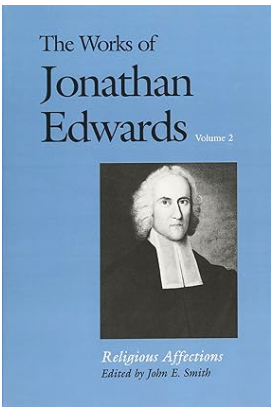
Jonathan Edwards published A Treatise Concerning Religious Affections in 1746, at a moment when American Christianity was tearing itself apart over a single question: are the revivals real? The First Great Awakening had swept through the colonies like a wildfire. People were weeping, fainting, crying out in anguish over their sins, and professing dramatic conversions by the thousands. Churches that had been half-empty for decades were suddenly overflowing. Something was clearly happening, but what?
On one side stood the enthusiasts, who pointed to the emotional intensity as proof that the Holy Spirit was at work. Tears, trembling, physical collapse, these were the marks of genuine revival, and anyone who questioned them was quenching the Spirit. On the other side stood the rationalists, who looked at the same phenomena and saw mass hysteria, emotional manipulation, and the dangerous fruits of uneducated itinerant preachers whipping crowds into a frenzy. The enthusiasts said: all emotion is from God. The rationalists said: all emotion is suspect. Edwards said: both of you are wrong. And he sat down to write the most careful, penetrating analysis of spiritual experience the church has ever produced.
What makes Religious Affections so remarkable is that Edwards was not a bystander. He was at the center of the revival. His own congregation in Northampton, Massachusetts had experienced some of the most dramatic conversions in New England. He had watched people he knew and loved undergo profound spiritual transformations, and he had also watched some of those same people fall away, proving that their experience, however intense, was not genuine. Edwards wrote this book not as a theorist but as a pastor who had seen the real thing and the counterfeit up close, and who needed to know the difference.
The Thesis: True Religion Consists Largely in Holy Affections
Edwards' central argument is deceptively simple: true religion, genuine Christianity, does not consist mainly in intellectual knowledge, nor in outward behavior, nor in dramatic experiences. It consists largely in what Edwards calls holy affections. These are not mere emotions. They are deep, settled dispositions of the heart that move the will toward God and away from sin. They include love, joy, gratitude, hatred of evil, hope, holy desire, and a tender, broken spirit.
Edwards draws a crucial distinction between affections and passions. Passions are intense but shallow. They flare up and burn out. They can be produced by a moving story, a powerful preacher, or the social pressure of a crowd. Affections, by contrast, run deeper. They are rooted in the understanding. They engage the whole person, mind, heart, and will, and they produce lasting fruit. A person can weep at a sermon without any genuine change of heart. But a person whose affections have been genuinely transformed by the Holy Spirit will live differently, think differently, and desire differently from that point forward.
This is the key move that sets Edwards apart from both the enthusiasts and the rationalists. He does not dismiss emotion. He insists on it. A Christianity without affection is dead orthodoxy, a head full of truth and a heart of stone. But he also insists that not all emotion is evidence of grace. The question is not whether you feel something, but what you feel, why you feel it, and what it produces in your life.
What Does Not Prove Affections Are Genuine
Before presenting the positive signs, Edwards spends considerable time explaining what does not prove affections are genuine. This section is one of the most valuable in the entire book, because it dismantles the assumptions that most Christians bring to evaluating spiritual experience.
Intensity of emotion proves nothing. A person can weep violently in a worship service without any genuine change of heart. Physical effects like trembling, fainting, or crying out prove nothing. These can be produced entirely by natural causes, by the energy of a crowd, by the power of a speaker's voice, by the emotional associations triggered by music. Being accompanied by Scripture texts that flash into the mind proves nothing, because the imagination can produce these spontaneously. Even producing apparent love and joy proves nothing, because these can be counterfeited by natural temperament, social influence, or even satanic deception.
Edwards lists twelve things that do not prove affections are genuine. They can be great in degree and still be false. They can produce effects on the body and still be false. They can come with great talk about religion and still be false. They can come uninvited and still be false. They can be accompanied by outward religious practice and still be false.
Edwards is not being cynical. He is being careful. He knows that many sincere people have been deceived by dramatic experiences that had no supernatural origin. And he knows that many pastors have validated those experiences because they did not know what to look for.
The Twelve Signs of Genuine Religious Affections
The heart of the book is Edwards' painstaking analysis of twelve distinguishing signs that separate genuine, Spirit-wrought affections from their natural and counterfeit imitations.
True affections arise from a spiritual, supernatural sense, a new perception of divine beauty that the natural person simply does not have. It is like gaining a new sense, the way a blind person who receives sight encounters a world of color that was always there but previously invisible. The regenerate person perceives the beauty of holiness, the glory of God's character, in a way the unregenerate person simply cannot.
True affections are grounded in the objective beauty and excellency of God, not in self-interest. The person loves God because God is beautiful, not merely because God is useful to them. This is the crucial distinction. Self-interested religion can produce powerful emotions, but they are ultimately about the self, not about God.
True affections are accompanied by an enlightened mind. Edwards has no patience for anti-intellectualism. The heart cannot love what the mind does not know. Genuine spiritual experience deepens understanding rather than bypassing it. True affections produce a conviction of divine reality. The things of God become vivid, weighty, and present rather than distant and theoretical.
True affections bring evangelical humiliation, a deep, experiential awareness of one's own sinfulness and smallness before a holy God. They produce a change of nature, not merely a change of behavior. They cultivate the spirit of Christ, gentleness, meekness, forgiveness, and love for enemies. They soften the heart, making a person more tender, more compassionate, more easily grieved by sin rather than hardened.
True affections maintain a beautiful symmetry and proportion. They do not fixate obsessively on one aspect of religion while neglecting others. They increase spiritual appetite rather than satisfying it. The more you taste of God, the more you want. And the ultimate sign: true affections produce Christian practice. They bear fruit. Not perfect fruit, but consistent, persevering, visible fruit that endures through trial and temptation.
Natural Emotions vs. Supernatural Affections
One of Edwards' most brilliant contributions is his analysis of how closely natural emotions can mimic supernatural affections. A person can feel profound sorrow for sin, not because the Holy Spirit is convicting them, but because they fear punishment. A person can feel intense love for God, not because they have seen His beauty, but because they believe He will give them health, wealth, or heaven. A person can feel overwhelming joy in worship, not because they are encountering the living God, but because the music is moving, the crowd is enthusiastic, and the endorphins are flowing.
Edwards insists that natural emotion and supernatural affection are fundamentally different in kind, not merely in degree. The natural person loves God for what God gives. The regenerate person loves God for who God is. The natural person fears hell. The regenerate person hates sin. The natural person wants the benefits of religion. The regenerate person wants God Himself.
This distinction matters enormously because it explains why so many people can have dramatic religious experiences and still fall away. Their experience was real, the tears were real, the feelings were real, but it was natural rather than supernatural. It engaged the emotions without transforming the will. It produced temporary change without permanent renovation.
Why This Book Still Matters
Religious Affections is still the best guide ever written for evaluating spiritual experience. Every generation faces its own version of the question Edwards addressed. Today it shows up in the worship wars, in debates about charismatic gifts, in the rise of emotionally charged worship experiences that may or may not produce lasting spiritual fruit, and in the quiet desperation of Christians who wonder whether their faith is real because they do not feel enough, or who assume their faith is solid because they feel so much.
Edwards gives us a framework that neither dismisses emotion nor idolizes it. He shows that the heart of true Christianity is neither cold orthodoxy nor heated enthusiasm, but a transformed nature that loves what God loves and hates what God hates, steadily, deeply, and fruitfully, through every season of life.
What makes Religious Affections more than an academic treatise is its pastoral warmth. Edwards is not writing to win an argument. He is writing to help people know whether their relationship with God is real. His twelve signs are not a checklist designed to fill you with anxiety. They are a mirror designed to show you the truth. And for those who look honestly and find genuine marks of grace, however faint, however mixed with remaining sin, Edwards offers profound encouragement. The presence of true affections, even in small measure, is evidence that the Holy Spirit is at work. You do not need perfect affections. You need real ones. And Edwards gives you the tools to tell the difference.