Summary
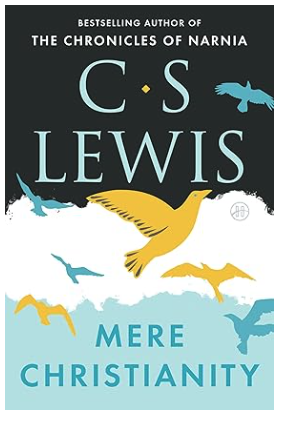
Mere Christianity started as a series of BBC radio talks during World War II. Bombs were literally falling on London when C.S. Lewis, an Oxford professor, former atheist, and reluctant convert, stepped up to the microphone and made the case for Christianity to a nation in crisis. The result is one of the most influential apologetics works ever written, and it remains as compelling today as it was in 1942.
What makes this book so enduring is that Lewis does not start with the Bible. He does not start with church. He starts with something every human being already recognizes: the stubborn, universal sense that some things are really right, and other things are really wrong. From that starting point, he builds a case for God, for Christ, and for the transformed life that Christianity offers, with the clarity and warmth of a man who has walked the road from skepticism to faith himself.
Part One: Right and Wrong as a Clue to the Meaning of the Universe
Lewis begins with a deceptively simple observation. When two people quarrel, they almost always appeal to some standard of behavior they both expect the other to know about. That is not fair. That is my seat, I was there first. Come on, you promised. These appeals only make sense if there really is a standard, a rule of fair play, that everyone recognizes deep down. Lewis calls this the Law of Human Nature, or the Moral Law.
He then carefully dismantles the objections. Is this just social convention? No, because different cultures disagree on details but agree on the big things. No civilization has ever admired cowardice or selfishness or treachery. Is it just instinct? No, because we often feel pulled between two instincts, one selfish and one generous, and the Moral Law is the thing that tells us which one we ought to follow. It is not the instinct itself. It is the judge between instincts.
Lewis's conclusion is striking. If there is a real moral law, it was not made by us. It exists outside of us. And if it exists outside of us, there must be a Mind behind the universe, a Moral Lawgiver who cares intensely about right conduct. This is not yet Christianity. It is the landing point that every honest thinker must reach before Christianity even enters the conversation.
And here comes the uncomfortable truth. If there is a standard of absolute goodness behind the universe, then every one of us is in trouble. Because none of us has kept it. Not perfectly. Not even close. Christianity, Lewis says, only makes sense to people who have first faced this uncomfortable reality about themselves.
Part Two: What Christians Believe
Having established the case for a Moral Lawgiver, Lewis turns to what Christians specifically believe about God and the world. He addresses the problem of evil head-on. If God is good, why is the world so full of suffering?
Lewis's answer is characteristically sharp. The very fact that we recognize the world as unjust means we have a standard of justice. And that standard only makes sense if there is a Just Being behind everything. Our sense that something is deeply wrong with the world is actually evidence that something is profoundly right beyond it.
He introduces the doctrine of free will. God created human beings with genuine freedom because love requires it. A world of automatons who always did right would have no evil, but it would also have no love, no goodness, no joy worth having. Free will is the door through which evil entered, but it is also the only door through which genuine love can walk.
Lewis then presents Christianity's central claim: God became human. He entered the mess. In Jesus of Nazareth, the Creator walked into His broken creation to fix it from the inside.
And here Lewis delivers perhaps his most famous argument: the Liar, Lunatic, or Lord trilemma. A man who said the sort of things Jesus said would not be a great moral teacher. He claimed to forgive sins committed against other people. He claimed to have existed before Abraham. He claimed to be one with the Father. Either He was a liar, a lunatic, or He was Lord. There is no fourth option. Lewis forces you to decide.
Lewis also explains the atonement in a way that has helped millions understand the cross. He does not insist on a single theory of how it works. He simply says that Christ's death somehow puts us right with God, that by dying He disabled death itself, and that this is the central event of all history. The how matters less than the that. What matters is that the door is open, and anyone who walks through it is welcome.
Part Three: Christian Behavior
In the third section, Lewis explores what the Christian life actually looks like in practice. He walks through the four cardinal virtues: prudence, which is practical wisdom; temperance, which is self-control and balance in all things; justice, which is fairness and honesty; and fortitude, which is courage that perseveres even when the road is painful. These are not exclusively Christian virtues. They belong to all humanity. But Christianity adds three theological virtues that change everything: faith, hope, and charity.
Lewis makes a profound distinction between what he calls niceness and goodness. A naturally pleasant person is not necessarily a good person in the Christian sense. And a naturally difficult person who fights against their temper every day may be far more advanced in genuine goodness than the person who was born easygoing. What matters to God is not the raw material you start with, but what you do with it. God is not in the business of making nice people. He is making new creatures.
Then Lewis turns to what he calls the Great Sin, not lust, not greed, not anger, but pride. He calls it the sin that made the devil the devil. Pride is essentially competitive. It does not enjoy having something; it only enjoys having more of it than the next person. A proud person will look down on others, and as long as you are looking down, you cannot see Something that is above you.
Lewis's treatment of sexual morality is balanced and surprisingly relevant to the modern reader. He does not fixate on sexual sin above other sins, but he is clear that Christian chastity is a real standard that applies to everyone, married or single. He is also deeply compassionate, insisting that sexual sin is not the worst kind of sin and that the sins of pride and cruelty are far more destructive to the soul.
He discusses Christian marriage with remarkable insight. Marriage, Lewis says, is not primarily about feelings. Feelings come and go. The promise is what holds. And his definition of charity is not a warm feeling but a deliberate act of the will, choosing to treat people as if you loved them until the feelings follow. The action comes first. The feeling comes after.
Part Four: Beyond Personality
The final section is the deepest and most transformative. Lewis draws a distinction between two kinds of life: Bios, which is biological life, the natural life we share with animals, and Zoe, which is spiritual life, the uncreated, eternal life that exists in God Himself. Christianity, Lewis argues, is not primarily about moral improvement. It is about receiving a kind of life you do not have by nature, a life that comes from beyond the natural world entirely.
He uses a remarkable illustration. Imagine a tin soldier coming to life. The process might be painful for the tin; it might feel like being destroyed. But from the perspective of the one giving life, it is the greatest gift imaginable. That, Lewis says, is what God is doing with each of us. He is not simply patching us up or making us slightly better versions of ourselves. He is killing the old tin nature and breathing into us the life He has always intended us to have.
Lewis also introduces the idea of counting the cost. God will not stop at one room of your house. You invited Him in to fix a dripping tap, and He is tearing out walls, building new wings, and constructing a palace. It hurts. You do not understand what He is doing. But that is because you thought you were being made into a decent cottage, when in fact He is building a house fit for Himself to live in.
He introduces the concept of what it means to be little Christs, the idea that Christians are called to share in the divine life, to become, by adoption and grace, the kind of beings that Christ is by nature. This is not arrogance. It is destiny. It is what we were made for.
Lewis also addresses the difference between pretending and real transformation. He tells you to dress up as Christ, to begin acting as if you were a son or daughter of God, because the pretending will eventually become reality. It is like putting on a mask: the face underneath will change to match. This is not hypocrisy. It is how transformation works. You begin by imitating, and the Spirit does the rest.
Lewis closes with both a warning and a promise. The warning: God will not settle for half-measures. He will not be satisfied with a version of you that is merely improved. He wants total transformation, sons and daughters, not employees. The promise: if you let Him work, the result will be more you than you have ever been. The sculptor does not destroy the stone. He frees the figure that was trapped inside it all along.