Summary
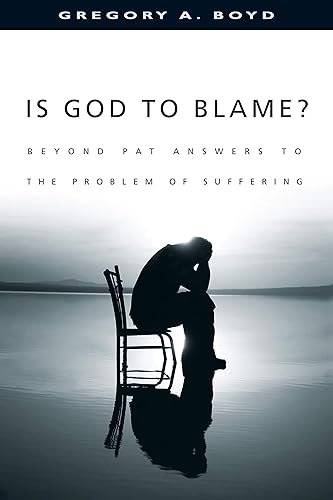
Gregory Boyd published Is God to Blame? in 2003 as the pastoral companion to God of the Possible. While that earlier book made the theological case for Open Theism, this book applies it to the most personal and painful question a human being can ask: Why is God allowing this suffering?
Boyd wrote this book not primarily as a theologian but as a pastor. He had sat with parents who lost children, with spouses facing terminal diagnoses, with victims of abuse who wondered where God was when they needed Him most. He found that the standard answers offered by classical theology, that God ordained your suffering for a greater purpose, that it is all part of His plan, that He knew this would happen before you were born, were not only intellectually unsatisfying but often spiritually destructive. They turned grieving people away from the very God who could bring them comfort.
The Blueprint Worldview
Boyd begins by identifying what he calls the blueprint worldview. This is the idea, common in both popular and academic theology, that everything that happens is part of God's detailed plan. God has a blueprint for history, and nothing happens outside that blueprint. If your child dies, it was God's plan. If you are diagnosed with cancer, God ordained it. If a natural disaster kills thousands, it was part of the grand design.
Boyd acknowledges that this view offers a certain kind of comfort. If everything happens for a reason, then even the worst suffering has meaning. But he argues that this comfort comes at a terrible cost: it makes God the author of evil. If God specifically planned your suffering, then God is directly responsible for it. And no amount of theological sophistication can escape that implication.
Boyd traces the blueprint worldview through church history, showing how it developed under the influence of Greek philosophical determinism and became entrenched in Western theology through Augustine and Calvin. He does not dismiss these thinkers. He honors their brilliance while challenging the philosophical framework they inherited. Boyd argues that the blueprint model owes more to Stoic philosophy than to the Bible itself, and that when we read Scripture without those philosophical lenses, a very different picture of God emerges.
He also explores the psychological damage the blueprint view can cause. When a mother is told that God planned her baby's death, she faces an impossible choice: either accept that God is cruel, or suppress her grief and pretend to be at peace with a theology that violates her deepest moral intuitions. Many Christians, Boyd observes, choose the second option. They stuff their pain, perform gratitude, and slowly lose their authentic relationship with God. The blueprint worldview does not always produce comfort. Sometimes it produces spiritual numbness.
The Warfare Worldview
Boyd presents an alternative he calls the warfare worldview. Drawing from Scripture, he argues that the Bible consistently portrays the world as a cosmic battlefield. God is at war against evil, against Satan, against fallen spiritual powers, and against the destructive choices of free beings. Suffering is not God's plan. Suffering is what God is fighting against.
Boyd points to Jesus as the definitive revelation of God's character. What did Jesus do when He encountered suffering? He healed. He delivered. He wept. He fought against disease, death, and demonic oppression. Not once did Jesus say to a suffering person, "This is God's will for your life." Instead, He treated suffering as an enemy to be defeated. Jesus cast out demons, raised the dead, opened blind eyes, and cleansed lepers. Every miracle was an act of war against the kingdom of darkness.
Boyd walks through the Gospels methodically, showing that Jesus's ministry was consistently one of confrontation with evil, not passive acceptance of it. When Jesus encountered a woman bent over for eighteen years, He did not tell her that her condition was part of God's plan. He called it what it was: bondage inflicted by Satan. And He set her free. This, Boyd argues, is the clearest window we have into the heart of God. If you want to know how God feels about suffering, look at what Jesus did about it.
The Role of Free Will
Boyd argues that genuine freedom, both human and angelic, is the key to understanding suffering. God created a world with genuinely free beings because love requires freedom. But freedom that cannot be misused is not freedom at all. And misused freedom produces real suffering.
This includes not just human freedom but spiritual warfare. Boyd takes seriously the biblical testimony that fallen angels, principalities and powers, are active agents of evil in the world. Much of the suffering we experience is not caused by God or even by human beings but by hostile spiritual forces that have rebelled against God's good purposes. Paul writes in Ephesians that our struggle is not against flesh and blood but against principalities and powers in heavenly places. Boyd argues that the church has largely forgotten this dimension of reality, and that recovering it changes everything about how we understand suffering.
Boyd also addresses the natural world. Earthquakes, hurricanes, diseases, and genetic mutations are not part of God's original design. They are the result of a creation groaning under the weight of cosmic rebellion. Romans 8 says that the whole creation has been subjected to futility. Boyd argues that this subjection was not God's plan A but a consequence of the fall, both angelic and human, that has corrupted the natural order. God did not design a world with childhood cancer. That horror reflects the brokenness of a creation at war.
God Redeems Evil Without Authoring It
This does not mean suffering is meaningless. Boyd insists that God can and does bring good out of evil. Romans 8:28, that God works all things together for good, is still true. But there is a crucial difference between saying God causes suffering for a purpose and saying God redeems suffering despite its purposelessness. In Boyd's view, God is not the author of the tragedy. He is the One who writes redemption into the story after the tragedy occurs.
Boyd uses the analogy of an aikido master. An aikido master does not initiate the attack, but when the attack comes, he redirects its energy toward a positive outcome. God does not author evil, but when evil strikes, God redirects it, transforms it, and weaves it into a larger story of redemption. The cross is the supreme example. The most evil act in human history, the murder of the Son of God, became the means of the world's salvation. God did not plan for His Son to be betrayed and murdered by wicked men in order to save the world. Rather, when wicked men did their worst, God transformed their wickedness into the instrument of His greatest victory.
Pastoral Implications
The most powerful sections of the book are pastoral. Boyd argues that the blueprint worldview often paralyzes people spiritually. If everything is God's plan, then there is nothing to fight against. But the warfare worldview empowers believers to resist evil, to pray aggressively, to fight for healing, and to work for justice, knowing that they are partnering with God against the forces of destruction.
Boyd also addresses the guilt that many Christians feel when suffering comes. In the blueprint worldview, people often wonder what they did wrong to deserve their suffering. If God planned this, maybe I am being punished. Maybe my faith was not strong enough. Maybe I sinned and this is the consequence. Boyd liberates the reader from this toxic cycle. Your suffering is not punishment. It is not a lesson. It is the result of living in a broken world where genuine freedom exists and where evil forces are at work. God is not teaching you through your pain. God is with you in your pain, fighting alongside you against the enemy that caused it.
Boyd shares stories from his own pastoral ministry. He tells of a woman whose husband died young, and who was told by well-meaning Christians that God took her husband for a reason. She spent years angry at God, unable to pray, unable to worship, because she could not love a God who would deliberately kill her husband. When she encountered the warfare worldview for the first time, she wept with relief. She could grieve honestly. She could be angry at the real enemy. And she could turn to God as her ally instead of her adversary.
The Critique and the Tension
Boyd honestly presents the critiques of his position. Many theologians argue that the warfare worldview diminishes God's sovereignty and control. If God does not specifically ordain every event, can He guarantee the final outcome? Boyd responds that God's sovereignty is demonstrated not in controlling every detail but in His ability to guarantee the final victory despite the genuine opposition of free creatures. The cross itself is the supreme example: the worst act of evil in history became the means of the world's salvation.
Boyd also acknowledges the tension in his view. If God is all-powerful, why does He not simply end evil now? Boyd's answer is that God is playing a long game. He has chosen to work through genuine relationship, genuine freedom, and genuine partnership with His creation. The war will end. Evil will be destroyed. But the victory will be won through love, not coercion, and that takes time.
Is God to Blame? is a deeply pastoral book that takes both theology and suffering seriously. Whether you ultimately agree with Boyd's framework or not, his insistence that God is unequivocally good, that suffering is an enemy God fights rather than a tool God wields, challenges every reader to rethink their assumptions about God and suffering.