Summary
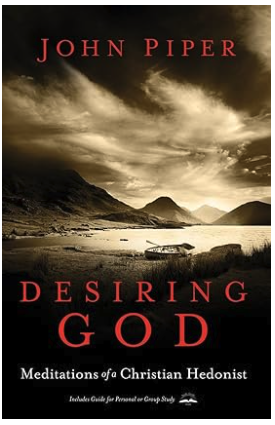
John Piper opens Desiring God with a claim that sounds like heresy until you understand it: the pursuit of your own happiness is not the enemy of worship. It IS worship. Piper calls this Christian Hedonism, a deliberately provocative term designed to stop you in your tracks and force you to reconsider everything you thought you knew about duty, delight, and what God actually wants from you.
The problem Piper identifies is one that has quietly plagued the church for centuries. Most Christians assume that duty and delight are opposed, that the holier path is the grimmer one, that doing the right thing means doing the hard thing joylessly, that any pleasure you take in obedience somehow contaminates it. Piper dismantles this assumption with surgical precision.
His thesis can be captured in a single sentence that has become one of the most quoted lines in modern theology: God is most glorified in us when we are most satisfied in Him. Read that slowly. It means your joy in God is not a byproduct of worship. It is the essence of worship. A joyless Christian does not honor God by gutting it out. A joyless Christian is a contradiction in terms. Duty without delight dishonors the One you claim to serve.
Why This Sentence Is Revolutionary
That single sentence rewrites the entire script of the Christian life. For centuries the church has operated under an unspoken assumption: the more you sacrifice your own happiness for God, the more He is pleased. Piper says no. That gets it exactly backwards. God is not honored by reluctant obedience. He is honored when you find Him so overwhelmingly satisfying that obedience becomes the natural overflow of a delighted heart.
Think about what this means practically. A husband who stays faithful to his wife purely out of duty, white-knuckling his way through marriage while wishing he were somewhere else, does not honor her. A husband who stays faithful because his wife is the deepest joy of his life? That honors her. The difference is not in the action but in the affection behind the action. Piper argues that God wants the same thing from us. Not grim, teeth-clenched compliance, but the glad surrender of a heart that has found its treasure and cannot imagine wanting anything else.
This is why the sentence is revolutionary. It does not lower the bar. It raises it. It is easy to go through the motions. It is far harder, and far more honest, to pursue a joy in God that runs so deep it transforms everything you do from the inside out.
The Foundation: God's Passion for His Own Glory
Before Piper can build his case for human joy, he must address a question that troubles many readers: why does God seem so obsessed with His own glory? Scripture is relentless on this point. God does everything, creation, redemption, judgment, for the sake of His name. To modern ears, this sounds like cosmic narcissism. Piper argues it is the opposite. It is the deepest possible expression of love.
Here is the logic. If God is the greatest being in the universe, the source of all beauty, truth, goodness, and life, then the most loving thing He can do is give you Himself. For God to point you toward anything less than Himself would be to shortchange you. A doctor who withholds the cure is cruel, not humble. God's self-exaltation is not arrogance. It is generosity. He magnifies Himself because He IS the treasure, and He refuses to let you settle for something smaller.
The universe, then, exists for God's glory. But this is not a cold, detached glory like a king demanding applause from peasants. It is a blazing, overflowing glory that invites you in. Your joy is not incidental to God's purpose. It is caught up in it. When you delight in God, His glory shines through you like light through a prism, and you become more fully alive than you ever were before.
Worship: The Inner Essence
Piper draws a sharp distinction between the outward forms of worship and the inner reality that gives them meaning. You can sing every hymn, recite every creed, attend every service, and give generously to the offering plate, and still not worship. Because worship, at its core, is not what you do. It is what you feel. It is the deep, settled satisfaction of a soul that has found its treasure.
Piper famously revises the Westminster Catechism's greatest sentence. The original reads: The chief end of man is to glorify God and enjoy Him forever. Piper changes one word, and changes everything: The chief end of man is to glorify God BY enjoying Him forever. That single word, by, collapses the gap between duty and delight. Glorifying God and enjoying God are not two separate activities. They are one and the same.
This is the Sunday morning problem that Piper will not let you ignore. Millions of Christians go through the motions of worship each week without their hearts being engaged. The songs are sung but not meant. The prayers are spoken but not felt. The offerings are given from obligation, not overflow. Piper calls this the scandal of joyless worship, and he traces it to a fundamental misunderstanding of what God actually wants.
The Relationship Between Duty and Delight
Piper is careful to clarify that he is not abolishing duty. He is fulfilling it. The commands of Scripture remain. But the commands themselves point toward joy. Delight yourself in the Lord. Rejoice in the Lord always. Taste and see that the Lord is good. These are not suggestions. They are imperatives. And they reveal something profound about the nature of God: He commands your happiness because your happiness in Him is His glory.
The false dichotomy between duty and delight has done enormous damage to the church. It has produced generations of Christians who obey out of guilt, serve out of obligation, and worship out of routine, all while wondering why their spiritual lives feel so dry. Piper says the dryness is not a mystery. It is the predictable result of trying to honor God while starving your own soul. You cannot glorify a fountain by refusing to drink from it.
Love: The Overflow of Joy in God
If worship is delight in God, then love is the overflow of that delight toward others. Piper argues that Christian love is not joyless, teeth-gritting self-sacrifice. It is the natural outpouring of a soul so full of God that it cannot help but give.
This reframes everything about how we serve. When you visit the sick, feed the hungry, or forgive the person who wronged you, it is not supposed to feel like a grim obligation. It is supposed to feel like the most natural thing in the world, because you have so much joy in God that it spills over into everything you do. Love from emptiness is exhausting and unsustainable. Love from fullness is effortless and contagious.
Serving others from delight rather than guilt is not less sacrificial. It is more. Because when your service costs you something and you still find joy in it, you are testifying that God is worth more than whatever you gave up. That is the most powerful sermon a life can preach.
Suffering: The Path to Deeper Joy
Piper does not shy away from suffering. He runs toward it. And this is where Christian Hedonism separates itself most decisively from the prosperity gospel and every feel-good theology that promises comfort in exchange for faith.
The prosperity gospel says: follow God and He will make you rich, healthy, and comfortable. Christian Hedonism says the opposite. Follow God and you may lose everything, your wealth, your health, your reputation, your safety, and still have more joy than the richest person on earth. Because your joy is not in the gifts. It is in the Giver. And the Giver cannot be taken from you.
Piper leans heavily on the apostle Paul, who wrote from a Roman prison: I count everything as loss because of the surpassing worth of knowing Christ Jesus my Lord. Paul did not say suffering was pleasant. He said Christ was worth more. There is a universe of difference between those two statements. One denies reality. The other transcends it.
The pattern throughout Scripture is unmistakable. Joy often comes not around suffering but through it. The refining fire that burns away your dependence on lesser things is the same fire that makes room for deeper satisfaction in God. Piper does not promise that this process will feel good. He promises that it will be worth it, because on the other side of every loss, God Himself is waiting as the reward.
Missions: The Fuel of Global Evangelism
Piper devotes an entire chapter to missions, and it is one of the most electrifying sections in the book. His argument is simple and devastating: you cannot commend what you do not enjoy. A missionary who goes to the nations out of guilt, fueled by nothing but obligation, will burn out, and worse, will commend a joyless God to a world that is already drowning in joylessness. But a missionary who goes because the glory of God has set their heart on fire? That person is unstoppable.
Missions, Piper argues, exists because worship does not. Where people do not know and enjoy God, there is a Christ-exalting, soul-satisfying joy that they are missing, and the missionary's job is to bring it. The Great Commission is not a burden laid on reluctant backs. It is an invitation to spread the one thing that satisfies the human heart. Christian Hedonism turns missions from drudgery into the most thrilling enterprise on earth: carrying the treasure of God's glory to people who are starving for it and do not yet know His name.
The Dangerous Duty of Delight
Piper closes the book with a phrase that captures the paradox at the heart of Christian Hedonism: delight is a duty. This is not a suggestion. It is a command. Rejoice in the Lord always; again I will say, rejoice. Paul did not write this from a beach resort. He wrote it from a jail cell. And the command to rejoice, Piper argues, is the most serious command in the Bible, because it goes to the root of everything else.
If you do not delight in God, your worship is empty, your love is forced, your service is performance, and your testimony is a contradiction. But if you do delight in God, deeply, honestly, from the bottom of your soul, then worship, love, service, and witness all flow naturally. Joy is not the icing on the cake. It is the engine of the entire Christian life.
This is not prosperity theology. It is not the promise of an easy life. It is the dangerous, costly, exhilarating claim that the God who made you placed a longing in your heart that only He can satisfy, and that the pursuit of that satisfaction, through every circumstance and every season, is the highest calling a human being can answer.