Summary
A Dare to Stop Playing It Safe
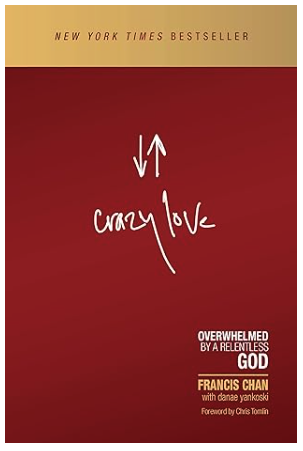
Francis Chan wrote Crazy Love as a dare — a challenge to every Christian who has settled into a comfortable, predictable, risk-free version of the faith, one that demands nothing, costs nothing, and changes nothing. Published in 2008, the book spent eighty weeks on the New York Times bestseller list and has sold over three million copies. It struck a nerve because it named something millions of Christians felt but could not articulate: the nagging sense that the faith they were practicing bore little resemblance to the faith they read about in the New Testament.
The God You Have Forgotten
Chan opens the book not with theology or argument but with awe. He asks readers to step back and consider the sheer scale of who God is — the God who spoke galaxies into existence, who invented color and laughter and thunderstorms and the migration patterns of monarch butterflies. The God who holds the oceans in His hand and calls every star by name.
The point is not to make you feel small. It is to make you feel astonished. Because this God, the infinite, all-powerful Creator who could have ignored you entirely, is instead relentlessly, personally, overwhelmingly in love with you. That is the "crazy love" of the title — not our love for God, but His love for us. A love so extravagant, so far beyond what we deserve, that the only sane response is to give Him everything.
Chan argues that most Christians have domesticated God. We have trimmed Him down to a manageable size so we can maintain control of our lives. We talk about His love but have stopped being undone by it. The first step toward radical faith is recovering the awe we have lost.
The Profile of the Lukewarm
The most uncomfortable chapter in the book — and the one readers talk about most — is Chan's "Profile of the Lukewarm." Drawing from Revelation 3:15-16, where Jesus says He will spit lukewarm believers out of His mouth, Chan builds a devastating list of what lukewarm Christianity looks like in practice.
Lukewarm people attend church regularly but are not changed by it. They give just enough money to feel generous but never enough to actually sacrifice. They choose what is safe over what is right. They are moved by stories of radical obedience but never act on that stirring. They want to be saved from the penalty of sin but not from sin itself. They love God, but they do not love Him with all their heart, soul, mind, and strength.
Chan is not trying to create guilt. He is trying to create urgency. His argument is direct: if the God of the universe has loved you with a reckless, pursuing, sacrificial love — a love that sent His only Son to die in your place — then a halfhearted response is not just inadequate. It is an insult. You do not respond to crazy love with mild interest. You respond with your whole life.
What Radical Love Looks Like
Chan does not simply diagnose the problem. He profiles real people who are living differently. He tells the story of families who have given away their wealth. He writes about believers who moved into dangerous neighborhoods to serve the poor. He describes ordinary Christians who have restructured their entire lives around a single question: what does a life that truly loves God actually look like?
These are not superhero stories. Chan is careful to show that radical obedience does not require a seminary degree or a move to a foreign country. It might mean adopting a child no one else wants. It might mean forgiving someone who wrecked your life and doing it without conditions. It might mean giving sacrificially to the point where it changes how you live. Or it might simply mean slowing down enough to be present with the people God has placed right in front of you.
The Eternal Perspective
Throughout the book, Chan keeps pulling the camera back to eternity. He argues that most Christians live as if this life is the main event, when Scripture is clear that it is the prologue. We obsess over comfort, security, retirement plans, and career advancement as if we will be here forever. But James 4:14 says your life is a mist that appears for a little while and then vanishes.
When you truly internalize that you will exist forever — that ten thousand years from now you will still be alive — everything shifts. The way you spend money, time, and energy looks completely different. The risks you are willing to take change completely. The person who gives away everything for the sake of the gospel is not the fool. The person who hoards everything for a life that is about to end is the fool.
You Cannot Serve Both Comfort and Christ
The book builds to a clear and uncomfortable conclusion: the Western church has created a version of Christianity that is perfectly compatible with a comfortable, self-centered life. We have turned following Jesus into a set of beliefs you affirm rather than a life you live. We have made it possible to call yourself a Christian without ever doing anything that requires faith.
Chan forces a choice. You can have comfort or you can have Christ, but you cannot serve both. The rich young ruler walked away sad because he had great wealth. Chan asks the reader: what are you walking away from Jesus to protect?
Why This Book Still Matters
Crazy Love was published in 2008, but its message has only grown more urgent. The culture of comfort and distraction that Chan was pushing against has intensified. Social media has made it easier than ever to perform faith without practicing it. Consumer Christianity has deepened its roots. The temptation to treat God as one option among many has never been stronger. Chan wrote the book not as a one-time wake-up call but as a permanent alarm against the drift toward domesticated faith.