Summary
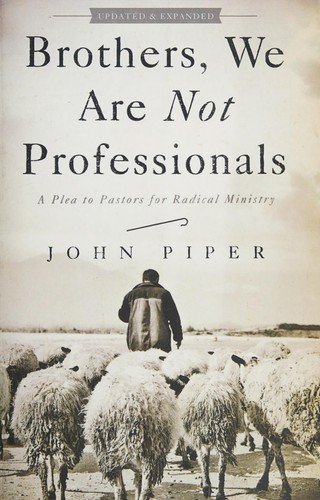
John Piper wrote Brothers, We Are Not Professionals as a direct, passionate plea to pastors and ministry leaders to resist the professionalization of the pastorate. The book's argument is simple and devastating: when pastors begin to think of themselves primarily as professionals -- managers, CEOs, communications experts, brand strategists -- the prophetic heart of ministry dies. What the church needs is not slicker programming or better organizational charts but God-besotted men and women who tremble at the Word and weep over the lost.
The Problem: Professionalism Kills Prophetic Ministry
Piper opens by defining the problem with surgical precision. The professionalization of the pastorate is not primarily about having good organizational skills or running a church efficiently. It is about the subtle but lethal shift in identity that happens when a pastor begins to see himself as a career minister rather than a called servant of the living God. The professional pastor manages expectations, avoids controversy, builds a personal brand, and measures success by attendance and budget. The prophet-pastor proclaims truth regardless of the cost, prays with desperation, and measures success by faithfulness to the Word.
This is not an argument against competence. Piper is not advocating for sloppy leadership or lazy preparation. He is arguing that competence in the service of careerism is far more dangerous than incompetence, because it produces a polished ministry that looks impressive from the outside while being spiritually hollow at the core.
The Pastor as Theologian, Not Therapist
One of Piper's recurring themes is the need for pastors to be deep thinkers about God. He laments the drift toward a therapeutic model of ministry in which the pastor's primary role is to help people feel better about their lives. While pastoral care and emotional support are genuine parts of the shepherd's calling, Piper argues that they must be rooted in robust theology, not pop psychology.
The pastor who replaces doctrine with self-help techniques may fill a room, but he will not build a church that can withstand suffering, resist cultural pressure, or produce mature disciples. Piper calls pastors back to the hard work of studying Scripture deeply, wrestling with theological questions honestly, and preaching with the kind of substance that feeds the mind while it stirs the heart.
This has practical implications for how leaders spend their time. Piper suggests that many pastors have gradually squeezed study and prayer out of their schedules in favor of meetings, emails, and administrative tasks. The result is sermons that are a mile wide and an inch deep, and a congregation that is spiritually malnourished despite being programmatically overfed.
Prayer Over Programming
If theological depth is the mind of faithful ministry, prayer is the heartbeat. Piper argues that the professionalized pastor replaces prayer with planning. When a problem arises, the instinct is to call a meeting rather than call a prayer gathering. When a new initiative is needed, the first step is a strategic plan rather than extended time on our knees.
Piper is not opposed to planning -- he is opposed to planning that has been divorced from dependence on God. He profiles pastors and leaders throughout church history who were known first and foremost as people of prayer, and he traces the spiritual power of their ministries to the hours they spent in the presence of God before they ever stepped into a pulpit or a boardroom.
For busy leaders, this chapter is both convicting and liberating. Convicting because most of us know our prayer lives do not match our rhetoric about prayer. Liberating because Piper frames prayer not as another item on the to-do list but as the lifeline that sustains everything else.
The Sufficiency of Scripture
Piper devotes multiple chapters to the authority and sufficiency of God's Word. He argues that the professionalized pastor subtly drifts from confidence in Scripture to confidence in methodology. The question shifts from "what does the Bible say?" to "what does the latest church growth research suggest?" While Piper does not dismiss the value of learning from research and best practices, he insists that the Bible must remain the final authority and the primary tool of pastoral ministry.
This conviction shapes preaching, counseling, leadership, and every other dimension of the pastor's work. The sufficient-Scripture pastor opens the Word with confidence that God will speak through it. The professional pastor treats the sermon as a TED talk with a Bible verse attached. The difference may be invisible to the casual observer, but its long-term effects on a congregation are profound.
Suffering and the Pastoral Calling
Consistent with his broader body of work, Piper addresses the inevitability of suffering in pastoral ministry. He argues that the professional model of ministry instinctively avoids pain -- it manages conflict to minimize discomfort, avoids hard truths to protect relationships, and prioritizes institutional stability over prophetic faithfulness. The result is a ministry that is safe but sterile.
Piper calls pastors to embrace the suffering that comes with faithful ministry: the pain of speaking truth when it is unwelcome, the loneliness of standing against cultural trends, the heartbreak of walking with people through tragedy, and the personal cost of pouring out your life for others. He frames this suffering not as a regrettable side effect of ministry but as a participation in the sufferings of Christ -- and therefore a source of deep, abiding joy.
Against the Cult of Personality
In an era of celebrity pastors and platform-building, Piper's warning against self-promotion is especially timely. He argues that the professional pastor is tempted to build a personal brand rather than point to Christ. Social media, book deals, conference circuits, and megachurch metrics can all become subtle substitutes for the humble, hidden work of shepherding souls.
Piper does not condemn large platforms or public ministry. He condemns the heart posture that craves recognition more than it craves God's glory. The antidote is not obscurity for its own sake but a relentless refusal to let ministry become about the minister. This requires the kind of spiritual self-awareness and accountability that many leaders lack -- and that the professionalized ministry culture actively discourages.
Practical Chapters on Pastoral Specifics
The expanded edition of the book includes short, punchy chapters on dozens of specific pastoral topics: preaching, baptism, the Lord's Supper, church discipline, racial reconciliation, the prosperity gospel, hell, heaven, justification, sanctification, and more. Each chapter is essentially a theological meditation on how a particular doctrine or practice looks different when approached by a prophet versus a professional.
These chapters make the book remarkably useful as a pastoral reference. A leader can pick up any chapter and find both theological grounding and practical challenge for a specific area of ministry. The cumulative effect is a comprehensive vision of pastoral ministry that is theologically rich, spiritually passionate, and relentlessly God-centered.
The Heart of the Matter
Piper's ultimate argument is not about methodology but about the pastor's soul. The professionalized pastor has a career. The faithful pastor has a calling. The professionalized pastor manages a religious organization. The faithful pastor shepherds souls under the authority of Christ. The professionalized pastor measures success by metrics. The faithful pastor measures success by faithfulness to the Word and love for the flock.
The book ends where it begins: with a plea. Piper is not lecturing from a position of superiority. He is begging his brothers and sisters in ministry to resist the powerful currents of professionalism and return to the raw, costly, glorious calling of being a messenger of the living God.