Rehabilitating the Puritan Image
Say the word "Puritan" in most modern conversations and the reaction is predictable. People think of black hats, witch trials, and a grim refusal to enjoy anything. H.L. Mencken famously defined Puritanism as "the haunting fear that someone, somewhere, may be happy."
This caricature is almost entirely wrong.
The real Puritans were among the most joyful, intellectually rigorous, and spiritually passionate Christians in history. They wrote poetry. They celebrated marital love with a frankness that would make some modern Christians blush. They built universities. They fought for religious liberty. And they produced devotional literature that has nourished the church for four centuries.
Two Puritans in particular deserve a fresh look: John Owen and John Bunyan. Between them, they represent the full range of the Puritan genius — one a scholar, the other a tinker — both consumed by the glory of God.
John Owen: The Theologian of Joy Through Mortification
John Owen (1616-1683) was the greatest English-speaking theologian of the seventeenth century. He served as chaplain to Oliver Cromwell, vice-chancellor of Oxford University, and pastor to a gathered congregation in London. His collected works fill 24 volumes.
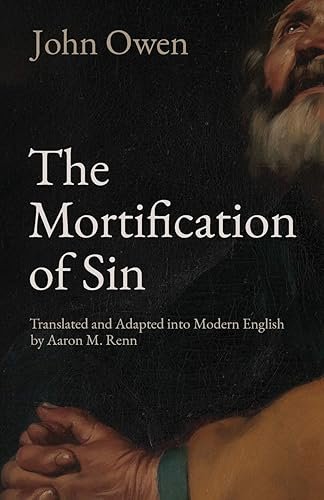
But Owen is best known for a slim book with a startling title: The Mortification of Sin. The premise is simple and devastating. Every Christian has remaining sin that must be actively put to death. Not managed. Not accommodated. Killed.
This sounds grim until you understand Owen's motivation. He did not mortify sin because he hated pleasure. He mortified sin because he loved a greater pleasure — communion with God. For Owen, sin is not just forbidden behavior. It is anything that dulls your capacity for joy in Christ. You kill sin so that joy can flourish.
This is the Puritan logic that modern people miss entirely. They were not against happiness. They were so committed to the deepest possible happiness — happiness in God — that they were willing to fight anything that threatened it. Their severity was the severity of a surgeon removing a tumor so the patient can live.
John Bunyan: The Storyteller Who Saw the Whole Journey
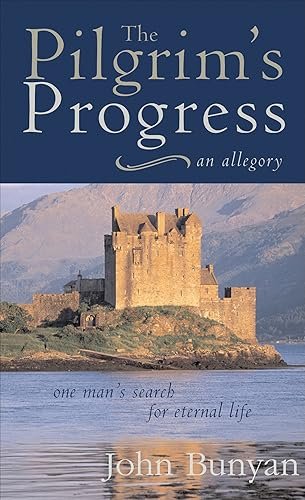
John Bunyan (1628-1688) could not have been more different from Owen in background. He was a tinker — a mender of pots and pans — with almost no formal education. He spent twelve years in prison for preaching without a license. And in that prison, he wrote The Pilgrim's Progress, the most widely read book in the English language after the Bible.
The Pilgrim's Progress is an allegory of the Christian life from conversion to glory. The protagonist, Christian, flees the City of Destruction and travels to the Celestial City, facing every obstacle the journey of faith can throw at a person. He sinks into the Slough of Despond (depression and doubt). He is tempted in Vanity Fair (the world's allure). He is imprisoned in Doubting Castle by Giant Despair. He crosses the River of Death.
What makes Bunyan's story endure is its emotional honesty. Christian is not a superhero. He stumbles, he doubts, he makes bad decisions, and he sometimes follows bad companions. But he keeps walking. And he arrives.
Bunyan's genius was making theology feel like a journey everyone could recognize. You do not need a seminary degree to identify with Christian's struggle through the Valley of the Shadow of Death. You do not need to have read Calvin to feel the weight lifted at the cross, where Christian's burden rolls away.
The Art of Holy Living
What Owen and Bunyan share — despite their differences in education, station, and temperament — is a vision of the Christian life as an active, intentional, joy-pursuing fight.
The Puritans did not believe holiness happened by accident. They cultivated it. They examined their hearts with surgical precision. They prayed with urgency. They studied Scripture with a depth that puts most modern Bible reading to shame. And they did all of this not out of grim duty but because they believed — really believed — that God was the most satisfying reality in the universe.
Leland Ryken, one of the foremost scholars of Puritan culture, has documented how the Puritans celebrated creation, encouraged marital intimacy, valued physical health, enjoyed recreation, and regarded their daily work as sacred. They were not anti-pleasure. They were anti-idolatry. They refused to let lesser goods replace the greatest Good.
Why You Should Read Them
If your image of the Puritans comes from popular culture, you owe it to yourself to read the originals. Start with Bunyan's The Pilgrim's Progress for the big picture of the Christian journey. Then read Owen's The Mortification of Sin for the inner mechanics of spiritual growth.
Both are available as free downloads (the texts are in the public domain), and both have 12-minute summaries on The Scroll.
You may discover that these supposedly dour, joyless people have more to teach the modern church about genuine happiness than almost anyone writing today.